


Why Do People Light a Diya Every Evening? Meaning and Traditions
As the sun sets and the day begins to slow down, many Indian households follow a simple ritual: lighting a diya, or traditional oil lamp. For some families, it is part of their daily puja. For others, it is a cultural tradition passed down through generations. The practice can be particularly familiar in homes where an evening prayer or aarti is performed. But why is a diya traditionally lit in the evening, and what does the small flame represent? The answer lies in the symbolic importance of light in Hindu traditions, where a lamp is often associated with knowledge, auspiciousness, devotion and the movement from darkness towards light..
What Does a Diya Symbolise?
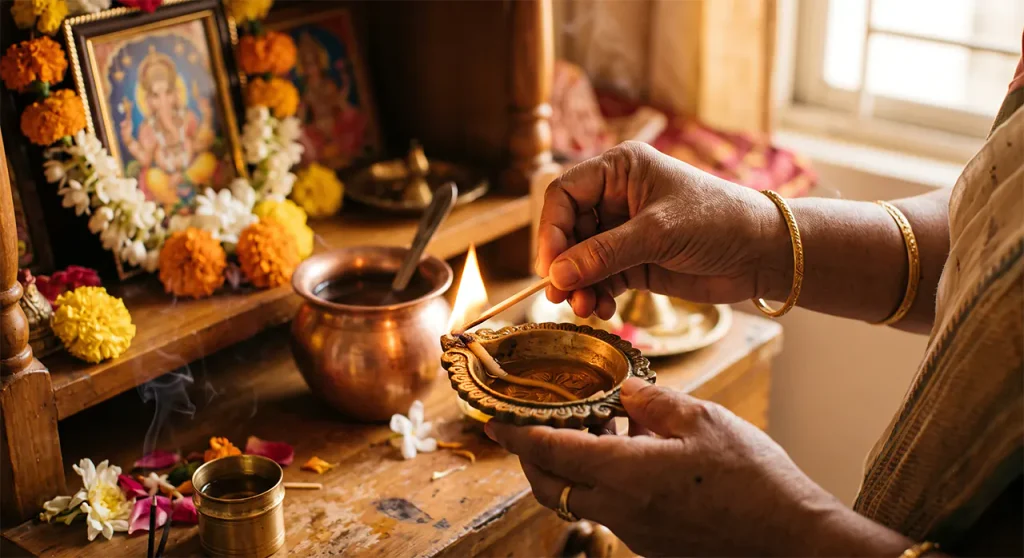
A diya is more than a source of physical light in a religious setting. The flame is traditionally understood as a symbol of light overcoming darkness. On a spiritual level, this darkness can represent ignorance, confusion or negativity, while light can represent knowledge, awareness and wisdom. The symbolism is especially visible during festivals such as Diwali, when homes, temples and public spaces are decorated with rows of lamps. The Sanskrit name Deepavali itself is commonly explained as a combination referring to a row of lights or lamps. This symbolism also appears in explanations of everyday lamp-lighting traditions..
Why Is the Diya Lit in the Evening?

Evening is a natural transition from daylight to darkness. In traditional household routines, lighting a lamp at this time can mark the transition from the activities of the day to a quieter period of prayer, reflection or family time. The ritual may also accompany an evening aarti or prayer. Rather than being understood only as a physical act, the lighting of the lamp can serve as a reminder to bring calmness and awareness into the home. Some Hindu traditions describe the lamp as representing an upward movement towards the divine or higher consciousness..
The Spiritual Meaning of Light

Light has a deep symbolic role across Hindu traditions..
The diya's flame is commonly associated with qualities such as:-
- Knowledge
- Wisdom
- Purity
- Hope
- Devotion
- Positive energy
- Spiritual awareness
The contrast between light and darkness provides a simple metaphor for life. Lighting a diya can therefore become a moment of personal reflection: just as a lamp removes physical darkness, knowledge and awareness are traditionally seen as ways of overcoming inner confusion. The Art of Living similarly describes the lamp as a symbol of knowledge and encourages people to view the lighting of a lamp as a reminder to cultivate inner light..
Is Lighting a Diya Compulsory?

No. It is important to distinguish between a traditional practice and a universally mandatory religious requirement. Different Hindu families, communities and traditions follow different rituals. Some light a diya every evening, some do so during puja or festivals, and others may not follow the practice at all. The Art of Living also notes that lighting a lamp in the puja room is not compulsory and describes it as a household ritual that can help create a particular atmosphere. So, for many families, the practice is about devotion and tradition rather than a compulsory rule..
Diya and Evening Puja
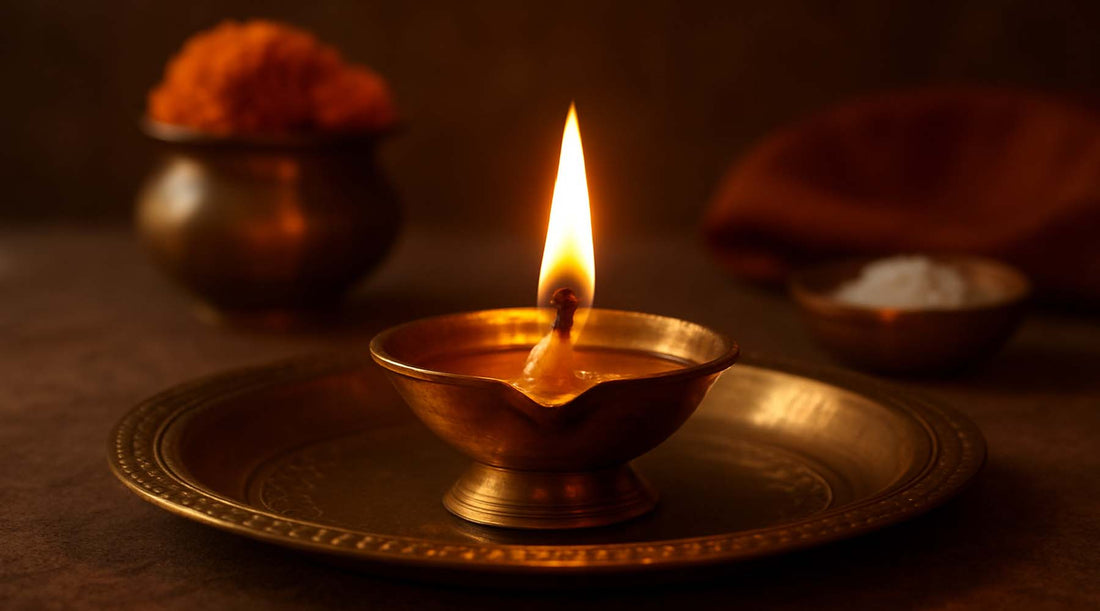
In many homes, the evening diya is part of a larger puja routine..
A typical evening ritual may include:-
- Cleaning or preparing the prayer area
- Lighting the diya
- Offering flowers or other traditional offerings
- Reciting prayers or mantras
- Performing aarti
- Spending a few quiet moments in prayer
The exact practice varies considerably between families and regions. In some traditions, the diya may be placed before a deity during puja. During aarti, the lamp is moved in a circular motion as an act of reverence..
Why Are Oil and Ghee Used?
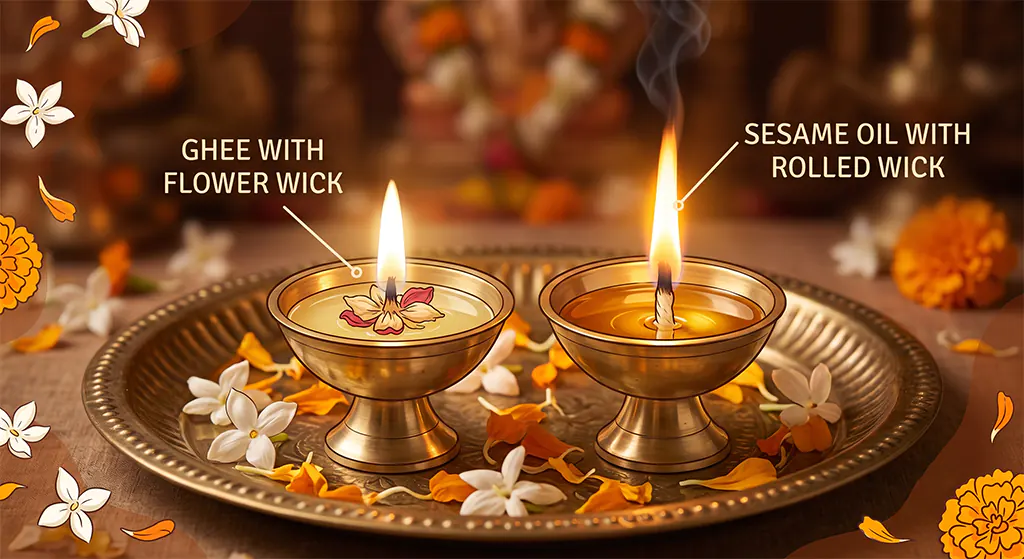
Traditional diyas are commonly fuelled with oil or ghee, with a cotton wick placed in the lamp. The choice can vary according to family tradition, region, ritual and availability. Different traditions may use materials such as sesame oil, mustard oil or ghee for particular rituals. For example, guidance on Akhand Jyot traditions describes the use of oil or ghee lamps and cotton wicks. There is no single practice followed by every Hindu household..
What Does the Wick Represent?
The diya itself can also be interpreted symbolically. Traditional spiritual explanations sometimes compare the human body to the lamp and consciousness or knowledge to its light. The wick serves as the medium through which the fuel produces the flame. This creates a broader philosophical idea: human life, like a lamp, can be directed towards knowledge, awareness and a higher purpose.
Such interpretations are spiritual teachings rather than scientific explanations..
Diya and the Idea of Removing Negativity
One of the most familiar meanings associated with lighting a lamp is the symbolic removal of darkness and negativity. The physical flame illuminates a dark space, while the ritual is traditionally understood as an opportunity to cultivate positive qualities within oneself.
These may include:-
- Patience
- Gratitude
- Compassion
- Peace
- Self-awareness
- Devotion
In this sense, the diya can become a reminder rather than simply a decorative object.
The Connection Between Diya and Aarti
The diya is closely associated with aarti, one of the best-known forms of Hindu devotional practice. During aarti, a lamp or flame is traditionally moved before a deity in a circular motion. Some spiritual explanations interpret this as a symbolic offering of light and as an expression of reverence. The Art of Living describes aarti as involving a lamp being taken around the deity and interprets the upward direction of the flame as a reminder of the direction of life and consciousness..
Diya During Festivals
Although diyas are used throughout the year, their importance becomes especially visible during Indian festivals.
Diwali
Diwali is perhaps the most famous festival associated with lamps. Homes and public spaces are decorated with diyas, candles and other forms of lighting. The festival's symbolism connects light with the triumph of knowledge over ignorance and good over evil in different traditional interpretations.
Navratri
During Navratri, some families and temples maintain an Akhand Jyot, a continuously burning lamp for a prescribed period. The practice is associated with devotion to the Divine Mother, and the flame is traditionally interpreted as representing knowledge, purity and spiritual qualities..
Dhanteras
On Dhanteras, which marks the beginning of the traditional Diwali festivities in many parts of India, lamps are also associated with specific rituals. One such tradition is Yamadeepdaan, in which a lamp is lit in connection with Yama, the deity associated with death in Hindu tradition. Different communities follow different customs around this practice..
Why Do Some People Light a Diya Near the Entrance?
In some households, lamps are placed near entrances, balconies, windows or other prominent areas of the home. The practice can have both decorative and traditional significance. During festivals such as Diwali, lamps near entrances are often associated with welcoming auspiciousness and prosperity. In some traditions, lighting at the entrance is also connected with the symbolic idea of allowing light and positivity into the home. These customs vary by region and family, so there is no single universal rule about where a diya must be placed..
Does a Diya Really Remove Negative Energy?
This is where tradition and science should be kept separate. In Hindu spiritual traditions, the diya may be associated with positivity, purification and the removal of darkness. However, there is no established scientific evidence that lighting a diya literally removes supernatural negative energy from a home. The value of the practice for believers can instead be understood through its religious, cultural and psychological meaning: it creates a moment of pause, prayer and reflection..
Why the Tradition Continues Today
Modern lifestyles have changed significantly, but many families continue to light a diya every evening. One reason is continuity. Children often learn the ritual by watching parents and grandparents, allowing a simple household practice to pass between generations. Another reason is the sense of routine it creates. After a busy day, lighting a lamp and spending a few minutes in prayer can provide a familiar transition into the evening. For many people, its significance is therefore both spiritual and cultural..
How to Light a Diya Safely
If you light a diya at home, basic fire safety is important..
Keep these points in mind:-
- Place the diya on a stable, heat-resistant surface.
- Keep it away from curtains, paper and other flammable materials.
- Keep children and pets away from an unattended flame.
- Avoid placing lamps where they can easily be knocked over.
- Never leave an open flame unattended.
- Extinguish the diya safely when it is no longer needed.
Traditional practices should always be followed with appropriate household safety.