


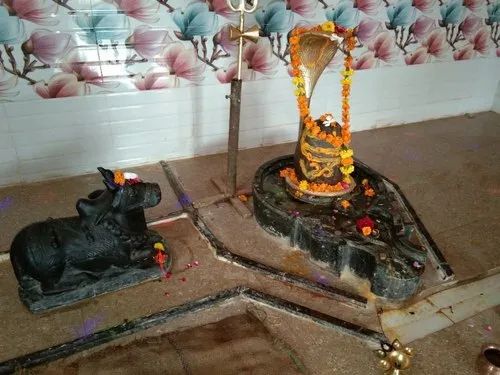
Whenever devotees visit a Shiva temple, they often notice a familiar sight: Nandi, the sacred bull, sitting in front of the Shivling with his face turned towards Lord Shiva. This arrangement appears in temples across India, but have you ever wondered why Nandi is placed there?Is it simply because Nandi is Lord Shiva's vehicle, or does this traditional placement carry a deeper spiritual meaning?
In Hindu tradition, Nandi represents devotion, loyalty, discipline and complete dedication to Lord Shiva. His position facing the sanctum is not merely decorative. It also communicates an important message about how a devotee approaches the divine.
Who Is Nandi, and What Is His Relationship With Lord Shiva?
Nandi is widely known as the sacred bull and the vehicle, or vahana, of Lord Shiva. In Shaiva traditions, he is also regarded as Shiva's devoted attendant and guardian..Nandi occupies a special position in Shiva worship because his relationship with the deity represents unwavering devotion. He is not simply an animal associated with Shiva; he is a central figure in the religious imagination surrounding Shiva's divine abode, Mount Kailash..In temple sculptures, Nandi is generally shown sitting calmly with his legs folded and his gaze directed towards the inner shrine.
Why Does Nandi Face the Shivling?
1. A Symbol of Unwavering Devotion
The most widely understood spiritual interpretation is that Nandi's gaze represents constant devotion to Lord Shiva..Nandi does not turn away from the deity. His posture conveys concentration, faith and dedication. For devotees, this becomes a reminder to approach worship with a focused mind rather than allowing distractions to dominate their thoughts..The lesson is simple: devotion is not only about visiting a temple or performing a ritual. It is also about sincerity and consistency in one's spiritual life..
2. Nandi and Shiva Are Connected Through the Temple's Architecture
Nandi's placement also has an architectural purpose. In many Shiva temples, the Nandi pavilion is positioned along the central axis leading towards the sanctum where the Shivling is worshipped..This arrangement creates a direct visual relationship between Nandi and Shiva. The devotee entering the temple sees Nandi facing the deity, reinforcing the idea of reverence and attentive worship..Art historians studying Indian temple architecture also identify this placement as a characteristic feature of Shiva temples. It is therefore both a religious symbol and an architectural tradition.
3. Nandi Represents Patience and Self-Control
Nandi is usually depicted sitting quietly rather than moving or displaying aggression. This calm posture is often interpreted spiritually as a reminder of patience, discipline and control over one's impulses..In everyday life, people may pray for success, peace or solutions to their problems. Nandi's image encourages devotees to combine faith with patience and responsible action..This is a spiritual interpretation of the sculpture, rather than a claim that worship guarantees a particular outcome.
4. Why Do Some Devotees Look at Shiva Through Nandi's Horns?
At some Shiva temples, devotees observe the Shivling through the space between Nandi's horns. This practice is associated with particular temple traditions and devotional customs..The alignment allows devotees to direct their attention towards the deity through Nandi's line of sight. However, the practice is not identical at every temple, and it should not be treated as a compulsory rule for all Shiva worshippers..If a temple has specific instructions about darshan, devotees should follow its local customs..
Why Do People Whisper Their Wishes Into Nandi's Ear?
Another familiar custom is whispering a wish or prayer into Nandi's ear..Many devotees believe that Nandi carries their prayers to Lord Shiva. This belief is rooted in popular devotional tradition and in the close relationship between Nandi and Shiva..The practice is especially visible at certain temples, where devotees approach Nandi and quietly express their wishes. For many people, it is a personal moment of faith and emotional connection..However, this custom is not followed in exactly the same way everywhere. Nor does whispering a wish guarantee that it will be fulfilled. Its significance lies in the devotee's belief, sincerity and sense of connection with the deity.
Is Nandi Present in Every Shiva Temple?
Nandi is a common and recognisable feature of Shiva temples, but temple layouts and traditions can vary. Some temples have large, separate Nandi pavilions, while others have smaller sculptures or distinctive arrangements..For example, the Hoysaleshvara Temple at Halebidu in Karnataka has two Nandi sculptures associated with its twin-shrine layout. This demonstrates how the placement of Nandi can reflect the design of a particular temple..
Such variations are one reason it is important to understand temple traditions in their individual contexts rather than assuming every shrine follows exactly the same arrangement.
What Can Devotees Learn From Nandi?
Nandi's presence before the Shivling offers a simple spiritual message: devotion involves patience, concentration and sincerity..His posture encourages devotees to pause, quiet their minds and approach prayer with respect. Whether someone understands the symbolism through religious faith, temple architecture or cultural tradition, Nandi remains one of the most recognisable figures associated with Lord Shiva..The next time you visit a Shiva temple, take a moment to observe Nandi's position. Beyond the familiar stone sculpture lies a centuries-old tradition that connects architecture, worship and the idea of unwavering devotion.
Conclusion: Nandi faces Lord Shiva because his traditional role as Shiva's sacred bull and devoted attendant is reflected in the design and symbolism of Shiva temples. For devotees, his steady gaze is a reminder that faith is expressed not only through rituals, but also through patience, discipline and wholehearted devotion..