


Have you ever seen a goddess made on a wall using cow dung and clay, decorated with stars, the sun, the moon and colourful ornaments? This beautiful traditional practice is known as Sanjhi Mata worship. It has been followed for generations in parts of Haryana, Punjab, Delhi, Rajasthan and western Uttar Pradesh..While many people celebrate Navratri by worshipping the nine forms of Goddess Durga, some families also follow this unique folk tradition. Girls and women create an image of Sanjhi Mata, decorate it and offer prayers every evening. The tradition combines devotion, creativity, folk songs and community participation.But what exactly is Sanjhi Mata, why is she worshipped for nine days, and what happens to the image on Dussehra?
What Is Sanjhi Mata?
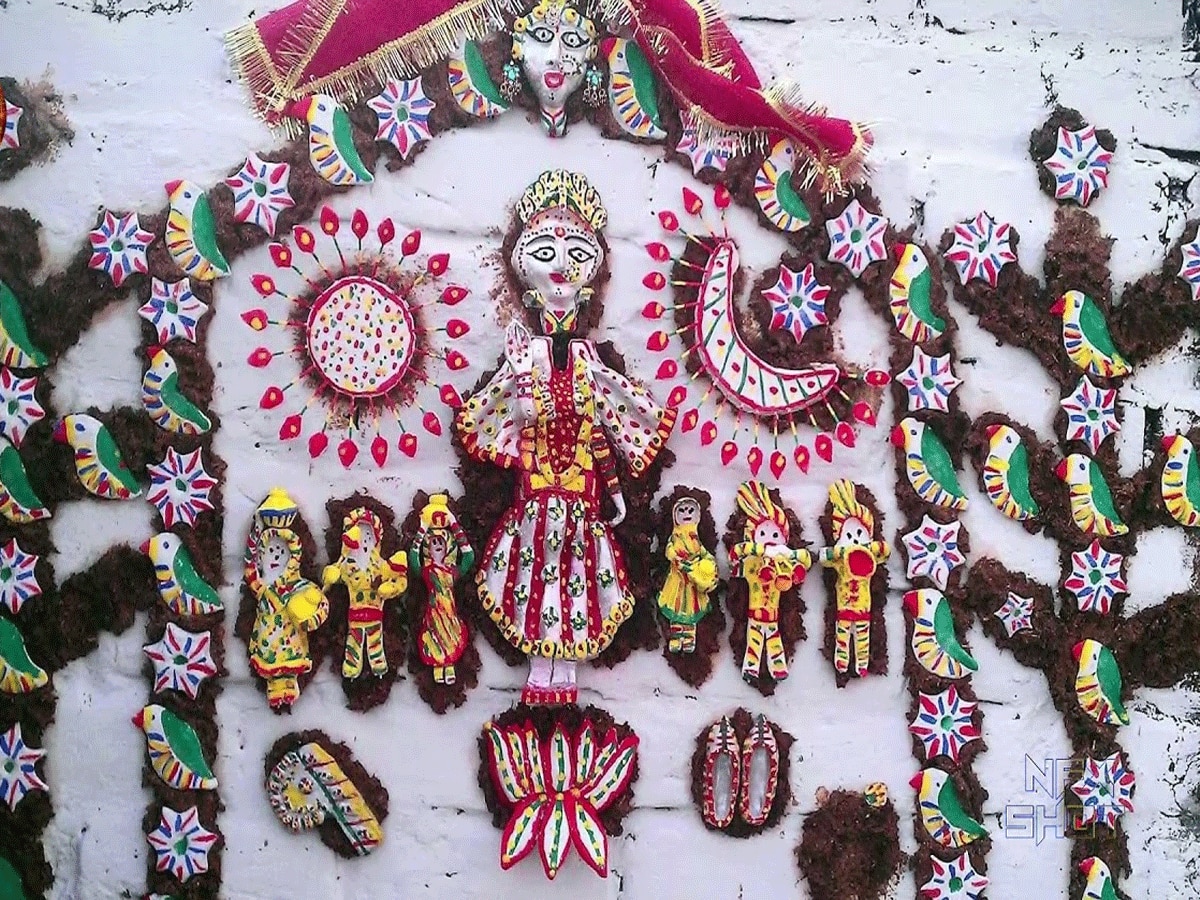
Sanjhi Mata is a goddess worshipped through a traditional wall decoration made using materials such as cow dung and clay. In many communities, she is associated with Goddess Durga or Parvati.The name Sanjhi is commonly connected with sanjh, meaning evening or twilight. This is when families traditionally gather to offer prayers, sing folk songs and perform aarti.Unlike large public Durga Puja pandals, Sanjhi worship has often been a household and neighbourhood tradition. Girls and women play a central role in preparing the image and keeping the ritual alive..
When Is Sanjhi Mata Made?
In parts of Haryana and Punjab, Sanjhi Mata is traditionally prepared at the beginning of Sharad Navratri. The image is worshipped during the nine nights of Navratri, and the observance may conclude on Dussehra, the tenth day..The wall is cleaned and prepared before the image is created. Cow dung and clay are traditionally used as a base, while the goddess and surrounding decorations may be made from clay, paper, cotton and other locally available materials.However, the exact date, design and method differ between communities. Sanjhi is not practised identically throughout North India.
Why Are the Sun, Moon and Stars Made Around Sanjhi Mata?
One of the most distinctive features of Sanjhi is the decoration surrounding the goddess. Traditional designs may include the sun, moon, stars, birds, trees and other figures.These designs turn the wall into a colourful display of folk art. The figures also reflect how traditional communities used familiar elements of nature and everyday life in their religious practices..The design varies from household to household. Some families create simple figures, while others prepare elaborate clay ornaments and decorative elements.
Why Do Girls Worship Sanjhi Mata?Traditionally, unmarried girls have played an important role in Sanjhi worship. In some communities, they pray for a suitable life partner, a happy married life and prosperity for their families.Women and girls may gather in the evening to sing traditional songs, offer prayers and perform aarti. Neighbours sometimes join the gathering, and prasad is distributed among those present..The practice is also a way of passing folk songs, artistic skills and family traditions from one generation to the next..
What Happens to Sanjhi Mata on Dussehra?
The conclusion of the ritual is one of its most important moments. In communities that follow the Navratri version of Sanjhi, the image is traditionally removed on or around Dussehra. In some places, its components are immersed in water according to local custom.This marks the end of the worship period, just as many other Hindu festivals conclude with the respectful removal or immersion of a sacred image.The procedure is not identical everywhere. Some families follow specific local customs, so it is best to follow the practice observed in their community rather than assume that every Sanjhi image must be immersed in the same way..
Is Sanjhi the Same as the Sanjhi Tradition of Braj?
No, the traditions can be different even though they share the same name.In parts of Haryana and Punjab, Sanjhi Mata is associated with Navratri and the conclusion of worship around Dussehra.
In the Braj region, especially around Mathura and Vrindavan, Sanjhi is also known as a distinctive devotional art tradition associated with Krishna worship. Another form of Sanjhi, documented by the Indira Gandhi National Centre for the Arts, is practised during Pitru Paksha. In that tradition, girls create and recreate wall designs during a period of roughly fifteen days..These traditions should not be confused with one another. Their timing, designs and religious associations can differ according to region..
Why Is This Traditional Festival Important Today?
Sanjhi Mata is more than a religious ritual. It represents a form of community art in which families create something together using traditional materials and skills..The evening gatherings bring neighbours together, while the songs and decorations preserve memories of local culture. As lifestyles change, some families have moved from handmade wall images to calendars, posters or other simpler forms of worship..Keeping the tradition alive does not necessarily require elaborate decorations. Learning the local songs, understanding the meaning of the ritual and teaching younger generations about its history can also help preserve it..
The Story Behind Sanjhi Mata
From the decorated walls of homes in Haryana and Punjab to the distinct devotional art of the Braj region, Sanjhi represents the diversity of India's religious and cultural traditions.For families that observe the Navratri version, the nine days of worship and the conclusion around Dussehra are an opportunity to celebrate faith, creativity and togetherness. Although the custom is less familiar to many people today, it remains an important part of the cultural memory of the communities that continue to practise it.This Navratri, learning about Sanjhi Mata offers a reminder that India's festivals are not limited to grand celebrations. Some of the most meaningful traditions live quietly in the courtyards and homes of ordinary families