


Why Is Kamakhya Temple Different From Other Hindu Temples?
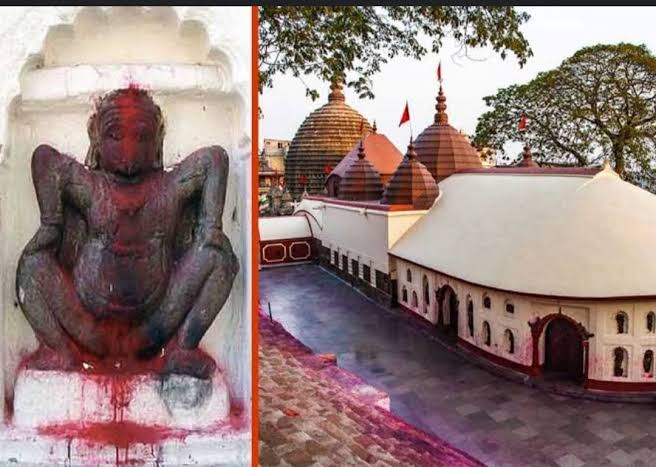
Most Hindu temples have an idol or image of the deity, but Kamakhya Temple in Guwahati, Assam, is different. Here, Goddess Kamakhya is worshipped not as a traditional idol, but as a sacred, naturally occurring rock cleft shaped like the female reproductive organ, with a natural spring flowing through it.
This makes Kamakhya one of India's most distinctive Shakti Peethas. The temple is especially famous for its connection with Goddess Sati, Tantric traditions and the annual Ambubachi Mela, which celebrates feminine creative energy and fertility..
1. The Mythological Story Behind Kamakhya Temple
According to Hindu mythology, Goddess Sati was the daughter of King Daksha and the wife of Lord Shiva. Daksha did not approve of her marriage to Shiva. When he organised a grand yajna, he invited many gods but deliberately excluded his daughter and son-in-law.
Despite this insult, Sati attended the ceremony. There, Daksha humiliated Lord Shiva in front of everyone. Unable to bear the insult to her husband, Sati gave up her life in the sacrificial fire, according to the popular version of the legend..When Shiva learned what had happened, he was overcome with grief and carried Sati's body. To restore balance, Lord Vishnu used his Sudarshan Chakra to divide the body, and the places where its parts fell became sacred Shakti Peethas.
According to the Kamakhya tradition, Sati's yoni—the female reproductive organ—fell on Nilachal Hill in Assam. This is why the place became associated with Goddess Kamakhya and the power of creation..This is a religious tradition, not a historically verifiable event.
2. Why Is There No Idol of Maa Kamakhya?
This is one of the most distinctive features of the temple.
Inside the sanctum, devotees worship a sacred rock cleft rather than a conventional statue. A natural spring keeps the sacred space moist, and the rock formation is revered as the goddess herself...The symbolism is important: the yoni represents creation, fertility and the power from which life emerges. In the Shakta tradition, the Divine Mother is not only a protective deity but also the source of life and cosmic energy.
Therefore, the absence of a traditional idol is not considered a lack. It is central to the temple's spiritual identity.
3. What Is Ambubachi Mela, and Why Is It Celebrated?
Kamakhya Temple is famous for the annual Ambubachi Mela, generally held around June during the monsoon season...According to the temple's religious belief, this is the period when Mother Earth—and, symbolically, Goddess Kamakhya—undergoes her annual menstrual cycle. The temple remains closed to devotees for three days during the observance and reopens after the prescribed rituals.
The festival attracts devotees, pilgrims and spiritual practitioners from different parts of India..Its significance goes beyond the rituals. It places menstruation and reproductive power within a sacred framework, presenting them as natural aspects of life rather than something to be treated with shame..The belief that the goddess menstruates is part of the temple's religious tradition; it should not be confused with a scientifically established physical event.
4. What Are Angodak and Angabastra?
After the Ambubachi observance, two forms of sacred offerings are traditionally associated with the temple.
Angodak refers to the sacred water associated with the shrine, while Angabastra refers to a piece of cloth associated with the goddess and her worship..Devotees regard these offerings as spiritually significant. The exact distribution and ritual arrangements can depend on the temple's practices for a particular year.
5. Who Rebuilt Kamakhya Temple?
Kamakhya Temple has a long and layered history. Its exact origins are difficult to establish, although the site is associated with ancient religious traditions and early medieval history..The present temple's history is closely connected with the Koch dynasty. The Assam government's Kamrup Metropolitan district information states that the earlier temple was destroyed and that Chilarai reconstructed it in 1565 under the Koch rulers..Later, the Ahom rulers also supported the temple and its wider complex. Over time, it became one of the most important centres of Shakta worship and Tantric traditions in the region..The temple is located on Nilachal Hill, overlooking Guwahati, and remains a major pilgrimage destination.
6. Why Is Kamakhya Temple So Important?
Kamakhya is not simply a temple associated with one mythological story. It represents several connected ideas in Hindu spirituality: Shakti, the power of the Divine Mother; creation and fertility; the sacredness of the natural world; and the relationship between spiritual practice and the cycles of life.
Its distinctive form of worship also sets it apart from temples where the deity is represented by a conventional idol.
For devotees, the temple is a place to seek the blessings of Maa Kamakhya. For visitors interested in India's religious heritage, it offers a glimpse into the diversity of Hindu traditions..