


Poompuhar: The Ancient Indian Port That May Be Hiding Beneath the Sea
Along Tamil Nadu's eastern coast lies a place where history and the sea appear to meet.
Known today as Poompuhar, and historically as Kaveripoompattinam, the site was once associated with a major port on the ancient Tamil coast. Tamil literary traditions describe it as a prosperous centre of commerce, where merchants, ships and goods from distant lands converged.
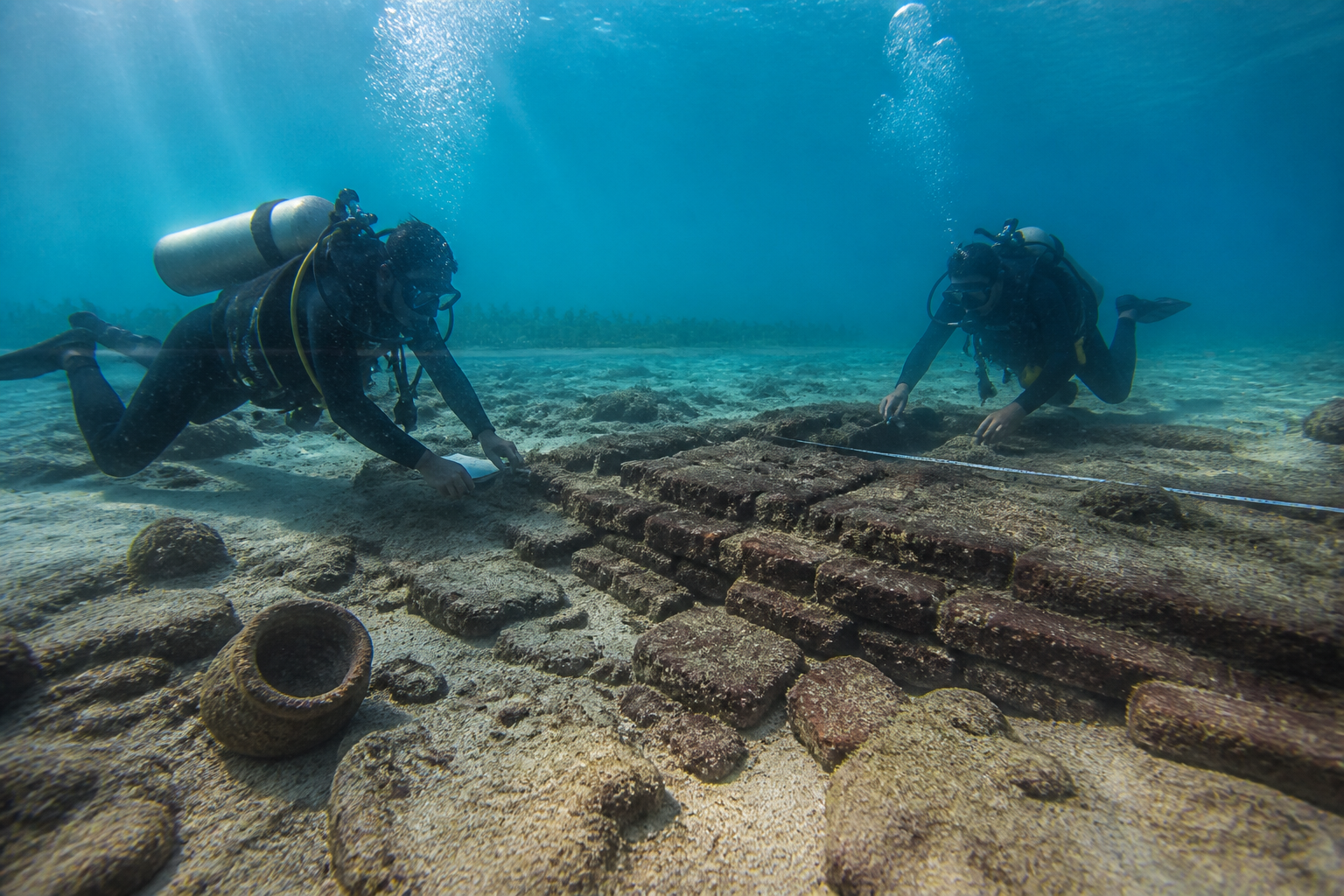
Now, archaeologists are looking offshore.Recent underwater exploration around 1.8 to 2.2 kilometres from the present shoreline has recovered pottery fragments from depths of roughly 10 to 12 metres. Among the discoveries are fragments of a vessel known as a torpedo jar, a type of container associated with long-distance maritime trade. Some of the material is believed to have originated in West Asia, although researchers are continuing to study the finds to establish their exact origin and date.The discoveries could provide important physical evidence for the ancient trading connections described in Tamil literature.

What Was Poompuhar?
Poompuhar was an ancient coastal settlement located near the mouth of the Kaveri River in present-day Tamil Nadu.Its location was extremely important.The river connected the settlement to the interior, while the coastline opened the way to maritime routes across the Bay of Bengal and the wider Indian Ocean.This combination made Poompuhar well suited to become a centre of trade.Ancient Tamil literature, particularly works associated with the Sangam tradition, contains descriptions of the city as a busy commercial settlement. Merchants and ships are portrayed as part of its economic life, while references to goods and overseas connections suggest that the port was not isolated from the wider world.Archaeology is now helping researchers test and expand that historical picture.
Why Is the Underwater Discovery Important?
The biggest challenge with Poompuhar is that much of the ancient coastal landscape is no longer where it once was. Coastlines change. Rivers shift course. Sea levels change. Storms and coastal erosion reshape settlements. Over long periods, parts of coastal cities can disappear beneath the sea. That makes underwater archaeology particularly important. Instead of relying only on literary descriptions or objects found on land, researchers can examine material preserved offshore.
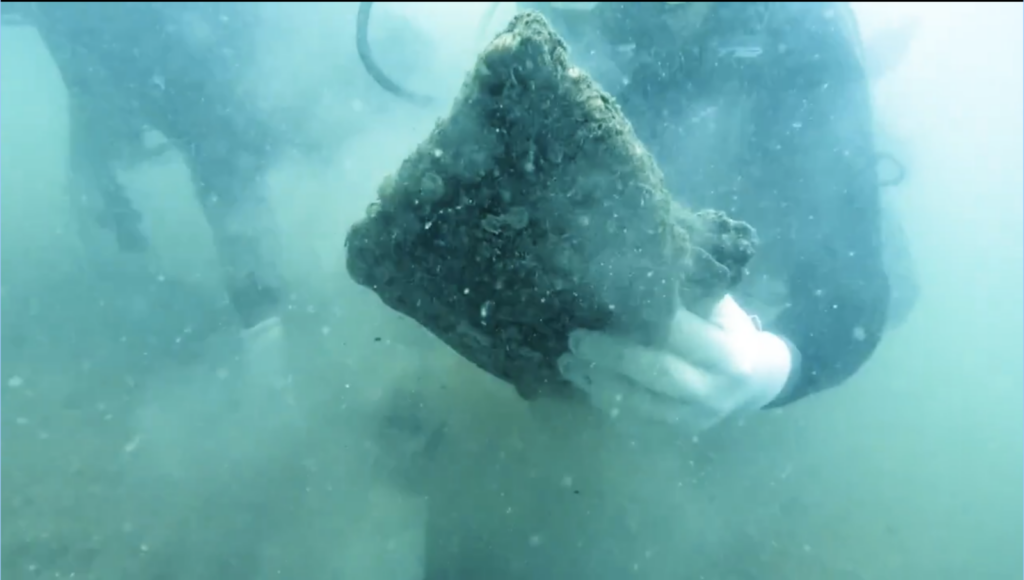
The recent exploration recovered pottery fragments and structural remains from the seabed. Researchers are also looking for evidence that could help map the ancient settlement and understand how its relationship with the coastline changed over time.
The Mysterious Torpedo Jar
One of the most intriguing finds is a fragment of a torpedo jar.The name comes from the vessel's elongated shape. These containers were used in long-distance trade and are associated with maritime exchange across parts of the Indian Ocean and West Asia.Finding such material near an ancient Indian port is significant because it can provide clues about the movement of goods and people across the sea.However, archaeologists are being careful.A single vessel fragment cannot by itself prove the full scale or direction of a trading network. Researchers need to establish the object's date, manufacturing origin and archaeological context before drawing stronger conclusions.That is why the ongoing analysis of the material is important.
Poompuhar and Ancient Indian Ocean Trade
Long before modern shipping routes connected continents, the Indian Ocean was already carrying merchants across enormous distances.The Indian subcontinent occupied a strategic position between the Middle East, Southeast Asia and the eastern Mediterranean trading world.
Indian ports handled commodities, ceramics, metals, textiles and other goods, while foreign products also reached the subcontinent.Poompuhar appears to have been part of this broader maritime environment.Other archaeological sites along India's coastline have also produced evidence of overseas connections. Together, these discoveries help historians reconstruct a picture of an ancient world in which the Indian coastline was an active part of international commerce.
What Do Tamil Texts Say About Poompuhar?
Poompuhar occupies an important place in Tamil literary tradition.The ancient Tamil epic Silappadikaram describes Puhar as a prosperous city filled with commercial activity and people from different backgrounds.Such literary descriptions have long attracted historians because they provide a vivid picture of life in an ancient Tamil port.But literature and archaeology tell different kinds of stories.Texts can describe how people understood a city, while archaeological evidence can reveal what people actually built, used, traded and left behind.The recent underwater discoveries are therefore valuable because they offer physical evidence that can be compared with the literary record.

Was the Entire Ancient City Lost Under the Sea?
This is where the story becomes more complicated. Poompuhar is often described as a "lost city" or a city swallowed by the sea. But archaeologists do not simply assume that the entire ancient settlement suddenly disappeared beneath the water.Coastal change is usually a much more complicated process.Sea-level changes, erosion, sediment movement, river migration and other environmental processes can gradually transform a coastline.Researchers are therefore studying the underwater landscape to understand exactly what happened to the ancient settlement.
The current exploration is still ongoing, and only a portion of the planned survey has been completed.
What Are Archaeologists Looking For Next?
Underwater research isn't limited to pottery. Researchers hope to map the ancient port landscape, identify possible structures, investigate shipwreck evidence, and understand how the coastline changed over time. The search could eventually help answer some of the biggest questions surrounding Poompuhar:
How large was the ancient port?
Where were its major harbour facilities?
What goods were traded?
Which regions did its merchants connect with?
And how did environmental changes transform the city?
Every new archaeological layer could add another piece to that puzzle.
Why Poompuhar Matters to Indian History
Poompuhar is more than the story of one ancient Tamil city.
Its history is part of a much larger story about India's relationship with the sea.
For a long time, popular images of ancient Indian history have focused mainly on large kingdoms, temples and land-based empires. But India's coastline was also a major stage for commerce, migration and cultural exchange.Sites such as Poompuhar show that ancient communities on the Indian coast were connected to networks that stretched far beyond the subcontinent.The discovery of possible West Asian trade material beneath the sea makes that story even more tangible..
A Lost Port, But Not a Forgotten History
The sea may have changed Poompuhar's landscape, but archaeology is slowly bringing parts of its story back into view. Pottery fragments sitting on the seabed may not look dramatic at first glance. Yet each fragment can contain information about where an object was made, how it travelled and the people who used it..That is what makes underwater archaeology so fascinating.
At Poompuhar, researchers are not simply searching for a lost city. They are trying to reconstruct a vanished world of ships, merchants, rivers and overseas connections. And the deeper archaeologists look beneath the water, the more complicated and more interesting the history of India's ancient maritime world becomes..