


In the midst of Delhi's chaotic Connaught Place, where shops and offices thrive and traffic never stops, there's a temple that's been around longer than the city itself. The Prachin Hanuman Mandir, on Baba Kharak Singh Marg, is a place of great spiritual significance in Delhi. But its significance goes beyond just faith - it's a blend of old traditions, stories from the Mughal era, and the changing face of Delhi. This temple has seen a lot over the years, and its history is closely tied to the city's own story. As you step inside, you can feel the weight of centuries of devotion and tradition. The Prachin Hanuman Mandir is more than just a place of worship - it's a connection to Delhi's past, a symbol of its rich cultural heritage. Despite being surrounded by the hustle and bustle of modern city life, the temple remains a tranquil oasis, a reminder of the city's enduring spirit.
A Temple Linked to the Mahabharata
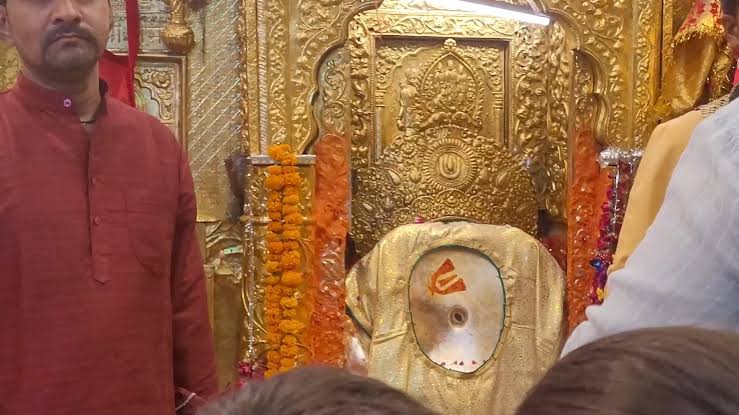
According to local belief, this temple is connected to the era of the Mahabharata. It is said that the Pandavas visited this region during their exile and worshipped Lord Hanuman.
The story of this temple is closely tied to the bond between Hanuman and Bhima, who was one of the Pandavas. What's interesting is that both Hanuman and Bhima are believed to be sons of the Wind God, Pawan Dev. But if we look for historical proof that the temple was actually around during the Mahabharata era, we come up empty handed there just isn't any solid evidence to back it up.
The temple's main attraction for its devotees is the central idol, which is believed to be a 'Swayambhu' - an idol that miraculously appeared on its own, without being created by human hands. This idol depicts Lord Hanuman in his childhood form, affectionately known as 'Bal Hanuman'. What's interesting is that the idol faces south, a distinctive feature that's often mentioned when describing the temple. It's a unique aspect that sets this temple apart. The devotees have a special connection with this idol, and it's considered a sacred representation of Lord Hanuman. The fact that it's a 'Swayambhu' idol adds to its significance, making it a truly special place for those who worship here.
The Connection to Mughal History
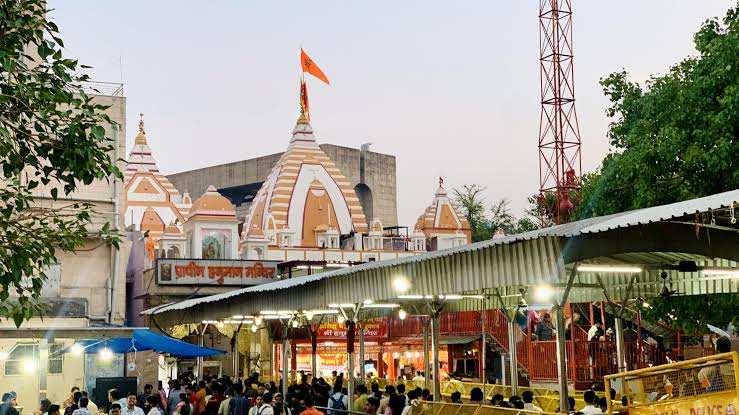
The temple's history goes way back to the Mughal era. If we look at old records, we find that the original building was built by Raja Man Singh of Amer. But the temple we see today was actually rebuilt or renovated by Maharaja Jai Singh II in 1724. This was a big change for the temple. We can still see the impact of that renovation today. The Mughal era was a significant time for the temple, and it's interesting to see how it has evolved over the years.
This time was special because of the Mughal Empire's power and the strong Rajput rulers who controlled Delhi and the areas around it. The way the rulers of Amer and the Mughal court worked together is important to understanding how this temple came to be.
The temple we see today is not exactly how it was originally built. Over time, people made changes and repairs to the building. In the 1980s, there was a big project to fix up the temple, and that's when it got the look it has now. But there's something interesting about the temple that still hasn't been fully explained - the mystery of the crescent moon shape that appears on its walls.
One of the most unique historical features of this temple is the crescent moon symbol atop its spire.
People say that a famous poet and saint named Tulsidas is connected to this symbol. The story is that the Mughal Emperor Akbar called Tulsidas and asked him to do something amazing. With the help of Lord Hanuman, Tulsidas did something that impressed the Emperor. After that, the Emperor said it was okay to put the crescent moon symbol on the top of the temple, or maybe he even helped make it happen. This symbol has a special meaning and it's still on the temple today. The story of Tulsidas and the Emperor is still told and remembered, and it's a big part of the temple's history. Some people believe that the symbol brings good luck and protection, and it's a reminder of the power of faith and devotion. The temple is a special place where people come to worship and pray, and the symbol is an important part of its identity.
The story of the temple's salvation is still told today, with some versions claiming that a special symbol played a key role in saving it from destruction. But it's worth remembering that these stories are deeply rooted in religious tradition, and while they may hold great significance, they can't be taken as entirely factual.
The story of this temple is a great example of how faith and history are tied together. It shows how stories about old rulers and their beliefs have become a big part of what the temple is today. This mix of faith and history makes the temple's identity really interesting.
A Historic Temple in a Modern City
During the development of New Delhi in the twentieth century, Connaught Place emerged as a major commercial hub. Yet, amidst this area defined by commerce, trade, and urban life, the Hanuman temple has consistently continued to draw devotees.
The temple's interior is adorned with beautiful artworks that showcase scenes from the Ramayana, which adds to the overall sense of devotion. What's more, its location is strategically close to other notable religious spots, like Gurudwara Bangla Sahib, making it a hub of spiritual activity. This proximity to other sacred sites only serves to enhance the temple's significance, allowing visitors to experience a deeper connection to their faith.
The temple is a place where people from all walks of life come together, especially on Tuesdays and Saturdays when fans of Lord Hanuman flock here to pray. It's not just a building - it's a spot where faith, history, and legends all meet. That's what makes its story so interesting. Even in a city that's always on the move, this old temple still holds a special spot in people's hearts.