


Harappan Civilization: How Did It End?
The Harappan Civilization was one of the earliest urban civilisations in the world. At its height, it had large cities, sophisticated drainage systems, standardised weights, long-distance trade networks and carefully planned settlements spread across parts of present-day India and Pakistan.
Yet by around 1900 BCE, the great urban centres of the Mature Harappan period began to decline. Cities such as Harappa and Mohenjo-daro lost much of their earlier urban character, large settlements became smaller, long-distance trade weakened and populations increasingly moved towards other regions. But what exactly happened? The answer is more complicated than a single invasion, natural disaster or political collapse. Archaeological research increasingly suggests that the end of the Harappan urban system was a gradual transformation rather than a sudden disappearance. Environmental stress, changing rainfall, river behaviour, agricultural difficulties, trade disruption and changes in settlement patterns appear to have interacted over several centuries..
When Did the Harappan Civilization Decline?
The Mature Harappan urban phase is generally associated with roughly 2600–1900 BCE. After about 1900 BCE, many of the features associated with large-scale urban Harappan society began to weaken. This did not mean that the people simply vanished. Instead, archaeological evidence indicates a reduction in the size and number of major urban settlements, followed by greater reliance on smaller settlements and changes in where communities lived. Population movement towards areas such as the upper Ganga-Yamuna region, Haryana, Gujarat and other parts of the subcontinent is an important part of the story. This is why many historians and archaeologists prefer the term “transformation” or “de-urbanisation” rather than simply calling it a complete collapse..
1. Climate Change and Weakening Monsoon
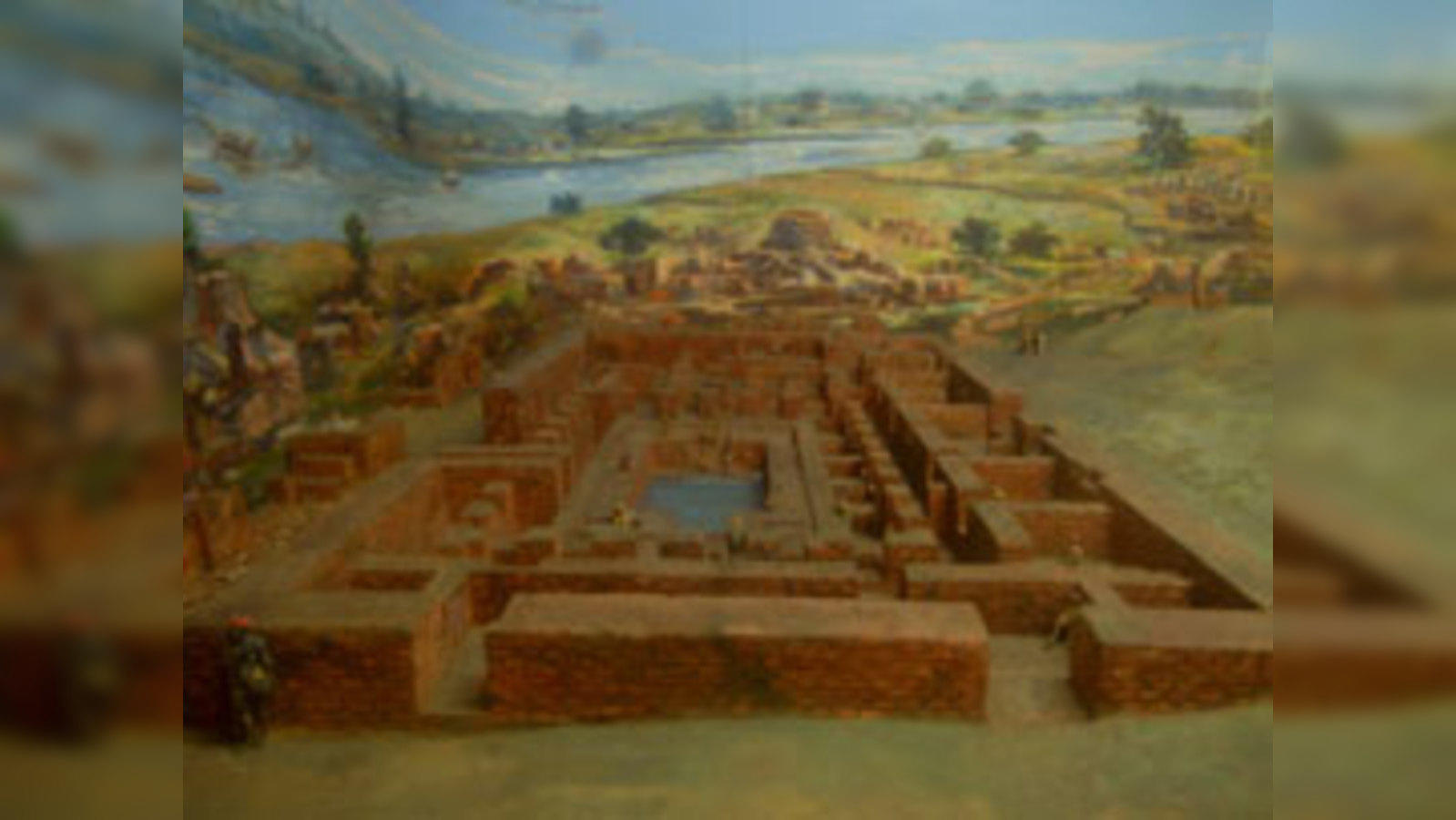
One of the strongest explanations involves changes in the climate. The Harappan economy depended heavily on agriculture and reliable access to water. Research using archaeological and palaeoclimate evidence suggests that the Indian summer monsoon weakened during the period when Harappan urban centres were declining. Studies of climate records indicate that increasingly dry conditions developed after a relatively wetter period. In parts of northwest India, evidence points to a shift towards drier conditions around the period when Harappan urban settlements began contracting. A weaker monsoon would have affected river flow, agricultural production and access to water. For a civilisation dependent on farming across a large semi-arid region, repeated changes in rainfall could have placed significant pressure on urban life. However, climate change alone may not explain everything..
2. Prolonged Drought and Water Stress
A more recent line of research has strengthened the drought theory. A 2025 study published in Communications Earth & Environment found evidence for repeated, prolonged droughts across the Indus region. Researchers identified several multi-decade drought periods during the period associated with the transformation of Harappan society. The study argues that these recurring droughts reduced river flow and rainfall, putting pressure on agriculture and encouraging communities to move towards regions with more reliable water supplies. This is important because it changes the picture of the Harappan decline. Instead of imagining one catastrophic drought destroying the civilisation, the evidence suggests that repeated periods of water stress may have gradually weakened the economic foundations of urban society. Farmers could change crops, communities could relocate and people could adapt. But repeated environmental pressure could make maintaining large cities increasingly difficult..
3. Changes in River Systems
Rivers were central to Harappan settlement patterns, so changes in river behaviour could have had serious consequences. Several Harappan sites were located near ancient river channels, including the Ghaggar-Hakra system. Researchers have studied whether changes in these rivers contributed to the decline of settlements in the region. However, this theory is more complicated than the simple idea that a giant river suddenly “dried up.” Research published in Nature Communications found that the major Himalayan-fed river system associated with the ancient Ghaggar-Hakra palaeochannel had already shifted away from the region before the main period of Harappan urbanisation there. This means that the old idea of a single major Himalayan river suddenly disappearing at the end of the civilisation does not fully explain the archaeological evidence. What does appear important is the changing availability and seasonality of water.
As monsoon-fed rivers became weaker or more seasonal, settlements dependent on those water systems could become less viable..
4. Floods and River Instability
If drought seems like one side of the story, floods represent the other. Some archaeological evidence, particularly from Mohenjo-daro, has been interpreted as evidence of repeated flooding. Earlier scholars proposed that severe flooding and prolonged waterlogging may have damaged parts of the city and contributed to its decline. Flooding could destroy buildings, damage agricultural land and disrupt settlement life. However, the flood theory does not explain the decline of the entire Harappan civilisation by itself. Flooding was a local or regional phenomenon, whereas the transformation of Harappan society occurred across a huge geographical area. Therefore, floods are generally considered a possible contributing factor rather than a complete explanation..
5. Decline in Long-Distance Trade

Harappan cities were connected to extensive trade networks. Archaeological evidence shows links between the Indus region and areas of present-day Afghanistan, Iran and the Arabian Gulf. Urban centres benefited from the movement of raw materials, finished goods and other commodities. When the urban system began changing, these long-distance networks also appear to have weakened. A decline in trade would have affected craft production, merchants and urban economies. If cities were already facing agricultural and environmental pressure, the weakening of trade could have added another layer of economic stress. Researchers therefore increasingly view the decline of Harappan society as the result of multiple interconnected pressures rather than one isolated event..
6. Agricultural Changes
Large cities require a reliable food supply. As rainfall patterns changed and water became less predictable, Harappan communities appear to have adapted their agricultural practices. In some regions, there was greater use of crops that could tolerate drier conditions. This was not necessarily evidence of agricultural failure. In fact, it demonstrates that Harappan communities were capable of adapting. But the shift from a highly urbanised system towards smaller settlements and different agricultural strategies suggests that environmental conditions may have made the old urban model increasingly difficult to maintain..
7. Migration and the Rise of Smaller Settlements
One of the most important clues against the idea of a sudden disappearance is the changing distribution of settlements. As major cities declined, populations did not simply disappear from the archaeological record. Instead, settlements became more dispersed, and populations shifted towards areas with comparatively better water availability. Research has linked this movement with an eastward and southward shift towards regions including Haryana, Uttar Pradesh, Gujarat and the upper Ganga plains. In other words, the end of Harappan urban civilisation may have been partly a story of migration and adaptation. People changed where they lived because the environmental and economic conditions supporting large cities had changed..
8. Was an Invasion Responsible?

For much of the 20th century, one popular theory suggested that invading Indo-Aryan groups destroyed the Harappan cities. This idea was once used to explain the end of the civilisation, partly because archaeologists found some human remains and evidence that was interpreted as possible violence. However, the invasion theory is no longer considered a sufficient explanation for the decline of the Harappan Civilization. The archaeological picture does not show evidence of a single widespread military destruction event capable of explaining the transformation across the entire Harappan region. Modern research therefore places much greater emphasis on environmental, economic, demographic and social processes..
9. Disease and Social Stress

Another possibility is that disease and health problems contributed to the decline of some urban settlements. Research on skeletal remains from Harappan contexts has examined evidence of infection, disease and changing living conditions. Some researchers argue that environmental stress could have interacted with health problems and social pressures. However, there is not enough evidence to identify disease as the single cause of the civilisation's decline. Instead, it may have been one of several pressures affecting communities already experiencing environmental and economic changes..
So, What Really Happened to the Harappan Civilization?
The most convincing explanation today is not a single “collapse theory.” The Harappan urban system appears to have undergone a long and complex transformation. Changes in monsoon rainfall and repeated droughts affected water availability. River systems became less reliable in some regions. Agricultural conditions changed, long-distance trade weakened and populations increasingly moved towards regions that offered better opportunities for farming and settlement. Large cities gradually lost their importance, while smaller settlements became more prominent. The process took place over centuries rather than in a single dramatic moment. Recent research describing the period as a “metamorphosis” captures this idea well: Harappan society changed its form rather than simply disappearing..
The Biggest Mystery Still Remains
One reason the end of the Harappan Civilization continues to fascinate historians is that the civilisation left behind no clearly deciphered historical records explaining what happened. The Harappan script remains undeciphered, meaning archaeologists cannot read contemporary written accounts describing the political or social situation. As a result, researchers have to reconstruct the story from pottery, buildings, settlement patterns, river sediments, animal remains, climate records and other archaeological evidence. What the evidence increasingly suggests is that there was no single day when the Harappan Civilization ended. Instead, its great cities gradually declined as environmental and economic conditions changed. Harappan communities adapted, migrated and developed new ways of living across different parts of the subcontinent..