


What if a city built by one of India's most powerful emperors became famous not just for its magnificent palaces, but also for a mystery that historians are still examining today?
Near Agra in Uttar Pradesh stands Fatehpur Sikri, the historic city developed by Mughal Emperor Akbar in the 16th century. It was designed as an imperial capital, with grand palaces, administrative buildings, religious structures and a planned network of streets. Yet, in 1585, Akbar shifted his capital to Lahore. Why did he leave a city that represented so much of his power and ambition? The popular explanation points to water scarcity, but history suggests that the story is more complicated..
Why Did Akbar Build Fatehpur Sikri?
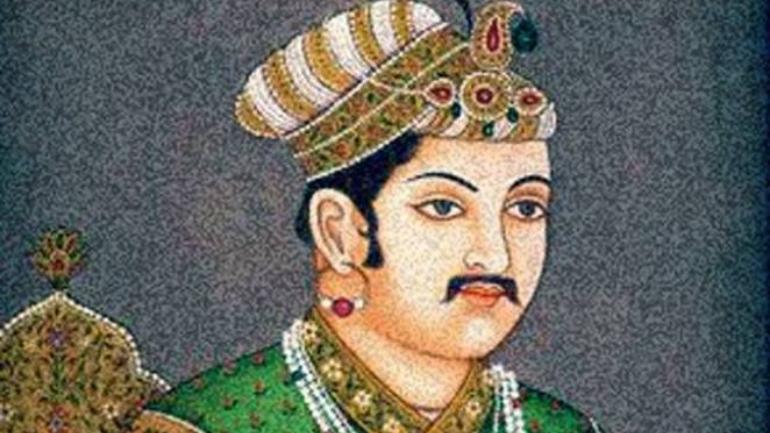
Fatehpur Sikri's story is closely associated with the Sufi saint Sheikh Salim Chishti, who lived in Sikri. Akbar visited the saint, and the birth of his son, the future Emperor Jahangir, became an important part of the site's historical and spiritual significance..Akbar began developing the city in the early 1570s. It soon became a centre of Mughal administration and royal life. Its architecture combined different artistic influences, while its buildings reflected the scale of the emperor's ambitions..The city included the Jama Masjid, the tomb of Sheikh Salim Chishti, the Panch Mahal and the famous Buland Darwaza. Rather than being just a collection of palaces, Fatehpur Sikri was planned to accommodate the royal court, officials, soldiers, servants and other residents. UNESCO recognises it as an exceptional example of Mughal urban planning and architecture..
Why Did Akbar Move His Capital?
This is where the mystery begins..Fatehpur Sikri served as the Mughal capital for roughly a decade before Akbar moved his court to Lahore in 1585. One widely repeated explanation is that the city faced water shortages, making it difficult to support a growing population..However, historians have questioned whether water scarcity alone explains the move. Research on Fatehpur Sikri has examined its water-management systems, political circumstances, military priorities and its continued life after the imperial court departed..Akbar's move towards Lahore also placed him closer to the north-western frontier, where the empire had important strategic concerns. This makes political and military considerations relevant to understanding the decision..
Therefore, it would be misleading to claim that Akbar abandoned Fatehpur Sikri overnight simply because its water supply dried up. The precise combination of reasons remains debated..
Was Fatehpur Sikri Completely Abandoned?
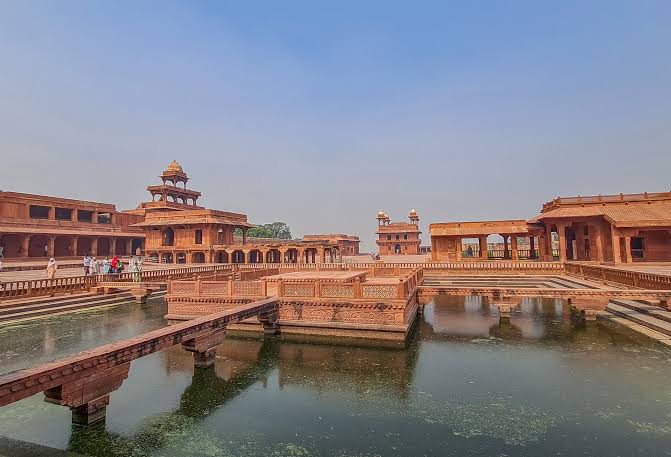
Another popular misconception is that the entire city became empty as soon as Akbar left.
Historical research challenges this idea. According to historian Syed Ali Nadeem Rezavi's study, Fathpur Sikri Revisited, the settlement continued to function after it ceased to be the imperial capital. It had economic activity, including textile production and indigo cultivation, and later Mughal emperors also visited the city..The royal court and its associated establishments lost their former importance, but that does not mean every resident immediately disappeared..This distinction matters: a city losing its status as a capital is not the same as a city instantly ceasing to exist.
What Can Modern Indian Cities Learn From Fatehpur Sikri?
Fatehpur Sikri's history has an interesting connection with the challenges faced by modern cities.
Today, growing urban centres must plan for water supply, drainage, housing, transport and the needs of expanding populations. A city may have impressive buildings and ambitious development projects, but its long-term success also depends on whether its basic infrastructure can support the people who live and work there..Fatehpur Sikri had a planned layout and a water-management system. Yet questions about its water resources and the reasons for the capital's relocation remain part of its historical debate..The lesson is not that Fatehpur Sikri failed for one simple reason. Instead, it shows why historians and urban planners must look at several factors together: natural resources, infrastructure, political decisions, economic activity and a city's strategic importance.
There is also a lesson about development. A city cannot be judged only by its monuments or the vision of the ruler who built it. Its ability to sustain communities and adapt to changing circumstances matters just as much.
Fatehpur Sikri Today: A Historic Legacy
Although it no longer serves as an imperial capital, Fatehpur Sikri remains an important part of India's cultural heritage. Its red sandstone architecture, monumental gateways, courtyards and religious buildings preserve evidence of Mughal-era urban life..UNESCO added Fatehpur Sikri to its World Heritage List in 1986. Today, the site attracts visitors interested in history, architecture and India's medieval past..Its significance goes beyond the story of one emperor. The city helps us understand how rulers built capitals, how political priorities changed and how urban settlements could continue evolving after losing their original purpose..