


Imagine creating an enormous temple without bringing thousands of bricks or building blocks to the site. Instead, imagine starting with a giant rock cliff and removing stone until an entire temple emerges from it..This is what makes the Ellora Caves in Maharashtra so extraordinary. Spread across a rocky hillside, these ancient monuments feature detailed sculptures, monasteries, temples and enormous pillars carved directly into the rock..But here's what makes Ellora even more fascinating: the complex contains monuments associated with Buddhism, Hinduism and Jainism. How did these different religious traditions become part of the same historical landscape? And how was its most famous monument, the Kailasa Temple, created?
Let's explore the history of Ellora Caves.
1. When Were Ellora Caves Built?
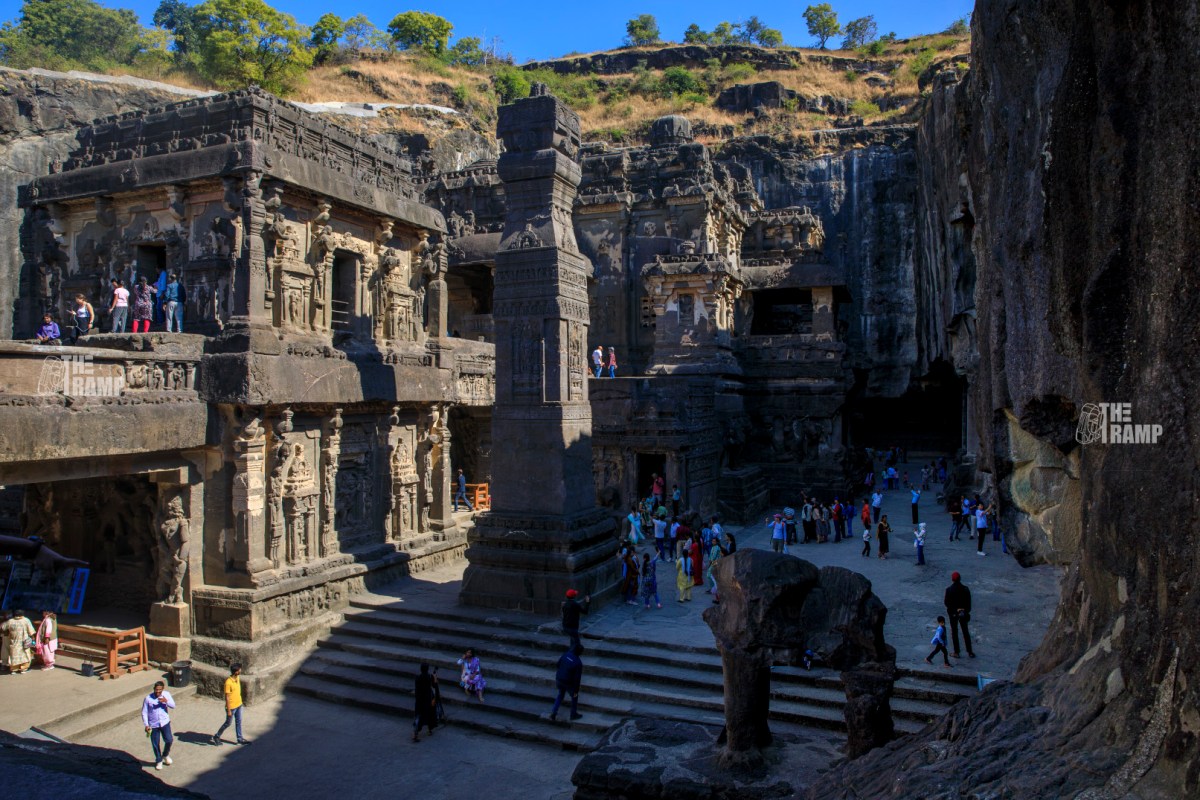
Ellora Caves were created over several centuries, broadly from the 6th to the 12th century CE. They are located in Maharashtra, near present-day Chhatrapati Sambhajinagar, historically known as Aurangabad..The site contains 34 principal caves open to visitors. These include monasteries, prayer halls, temples and sacred sculptures..Rather than being constructed all at once, the monuments were excavated during different periods. Their architecture reflects changes in artistic styles, religious practices and the political landscape of the region..Ellora became a UNESCO World Heritage Site in 1983 in recognition of its extraordinary artistic and architectural importance..
2. Why Are There Buddhist, Hindu and Jain Caves in One Place?
One of Ellora's most interesting features is the presence of monuments associated with three major religious traditions..
The caves are generally divided into three groups:
- Caves 1–12: Buddhist monuments, including monasteries and prayer spaces.
- Caves 13–29: Hindu monuments featuring temples and sculptures of deities.
- Caves 30–34: Jain monuments with intricate carvings and religious imagery..These monuments were created during different periods, not necessarily simultaneously. Their presence at the same site reflects the region's long history of religious and artistic activity..The caves provide a valuable record of how different communities expressed their beliefs through architecture and sculpture. They are also an example of how one landscape can preserve the artistic heritage of multiple religious traditions..
3. Kailasa Temple: The Monument That Looks Almost Impossible
The most famous monument at Ellora is the Kailasa Temple, also known as Cave 16. Dedicated to Lord Shiva, it is among the most remarkable achievements of Indian rock-cut architecture..What makes it unusual is the construction technique. Instead of assembling a temple from separate blocks of stone, artisans carved the structure directly out of a massive rock formation.
They removed surrounding rock to reveal the temple's towers, courtyards, pillars, sculptures and other architectural features..This required careful planning. A mistake during excavation could damage a major part of the structure, and the work demanded an extraordinary understanding of stone, design and craftsmanship..The temple is generally associated with the Rashtrakuta dynasty, particularly King Krishna I, who ruled in the 8th century. Its precise construction history is complex, and scholars continue to study its development..
4. Was Kailasa Temple Really Carved From the Top Down?
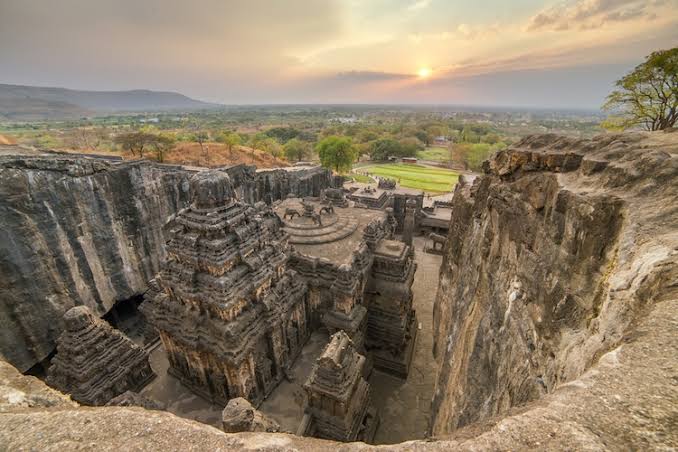
Yes. One of the defining features of Kailasa Temple is that the excavation proceeded from the top of the rock downwards..Think of it this way: in conventional construction, workers assemble a building by adding materials. At Kailasa, the artisans created the building by carefully removing material from the surrounding rock..They had to reveal the temple while preserving the stone that would become its walls, pillars, towers and sculptures..This is why the monument is often described as a monolithic rock-cut temple. The term means that the principal structure was carved from a single mass of rock rather than assembled from separate building blocks.The precision of the work is a major reason why Kailasa Temple continues to attract historians, architects and travellers..
5. The Famous Sculpture of Ravana Shaking Mount Kailasa
Among the striking artworks at Ellora is a sculpture showing Ravana attempting to shake Mount Kailasa, the legendary abode of Lord Shiva..According to Hindu mythology, Ravana tried to lift the mountain while Shiva and Parvati were there. Shiva pressed the mountain down, trapping Ravana beneath it. Ravana then sought Shiva's forgiveness.
At Ellora, the story becomes a dramatic stone composition. The sculptors used the figures, expressions and movement of the bodies to convey the tension of the scene..The artwork demonstrates how ancient Indian artisans transformed religious stories into detailed visual narratives..
6. Who Built the Ellora Caves?
There was no single builder responsible for the entire Ellora complex. Different monuments were excavated over generations, with royal patrons, religious communities, artisans and other supporters contributing to their development..The Rashtrakuta dynasty played an important role in the creation of major Hindu monuments, particularly the Kailasa Temple. Other caves reflect different periods of religious and artistic activity..The identities of many individual artisans are not known. However, the quality of the work reveals highly developed skills in rock excavation, sculpture and architectural planning..Ellora's history is therefore not just the story of kings. It is also the story of the craftspeople whose work transformed a rocky hillside into an extraordinary collection of monuments..
7. Are Ellora and Ajanta Caves the Same?
No. Ellora and Ajanta are two different cave complexes in Maharashtra, although both are famous for their ancient art and architecture.Ajanta is especially renowned for its Buddhist paintings and sculptures. Its monuments belong to two major phases, beginning in the centuries before the Common Era and continuing into the 5th and 6th centuries CE..Ellora, on the other hand, is particularly known for its rock-cut monasteries and temples associated with Buddhism, Hinduism and Jainism. Its most celebrated monument is the Kailasa Temple..Both sites are UNESCO World Heritage Sites, but they offer different experiences of India's artistic and religious history..
Why Ellora Caves Still Matter Today
Ellora Caves are much more than a tourist attraction. They preserve centuries of artistic achievement and provide insight into the religious traditions, architectural knowledge and craftsmanship of ancient India..Their most remarkable lesson is that the monuments were not simply built on the landscape. They were carved out of it, with extraordinary care and imagination..From Buddhist monasteries to Jain sculptures and the monumental Kailasa Temple, Ellora tells a story of artistic innovation across generations..For travellers interested in history, architecture and spirituality, Ellora is a reminder that some of India's most remarkable wonders can be found not only in what ancient people built, but also in what they carved away..