


Can You Tell Whether a Photo or Video Was Made by AI?
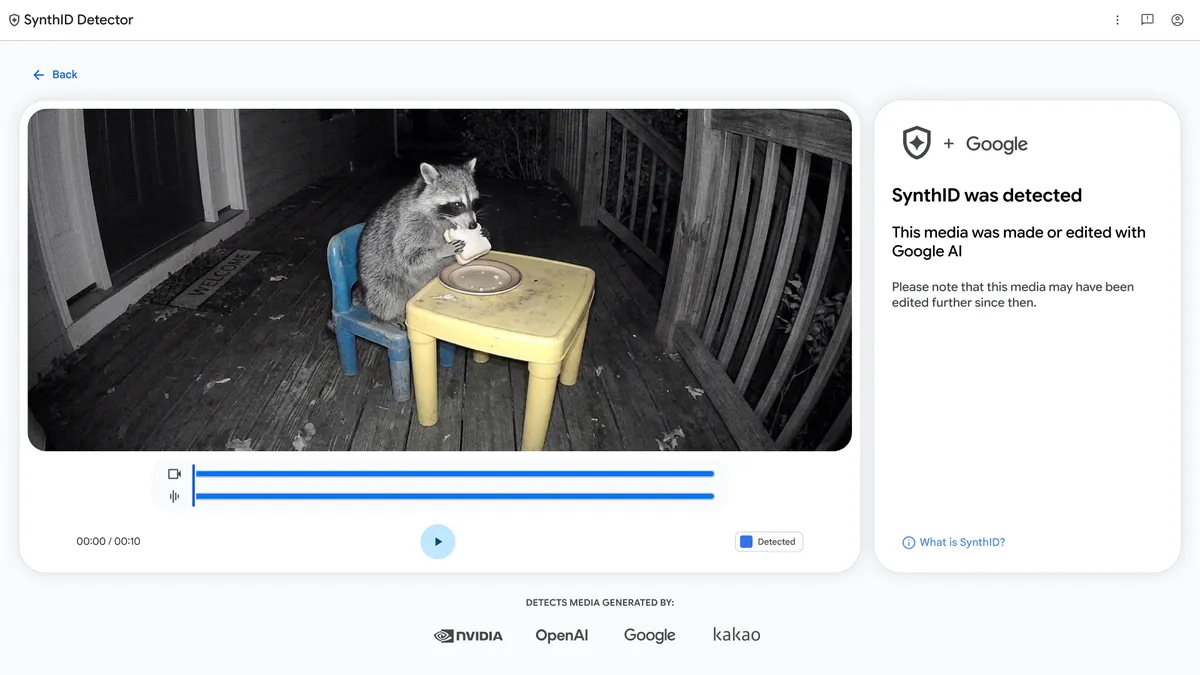
A photograph may look completely real, even when it was created using artificial intelligence. The same problem applies to videos and audio clips shared on social media. As generative AI tools improve, it is becoming increasingly difficult to identify how some digital content was created just by looking at or listening to it..Google's SynthID technology is designed to help address this challenge by embedding digital watermarks into content generated by supported Google AI tools. The company has also introduced a detector to help identify these watermarks..
What Is Google SynthID?
SynthID is Google's technology for watermarking AI-generated content. Instead of relying only on visible labels, it embeds a watermark into supported content so that specialised detection tools can look for it later..Depending on the content type and the tool used, the watermark may be embedded into an image, audio recording, video or other supported media..The important point is that SynthID is not a universal detector for every AI tool. It is designed to identify watermarks associated with content created using supported Google AI systems..
How Does SynthID Detection Work?
A conventional watermark may be visible on top of an image. SynthID works differently: its watermark is designed to be embedded into the content itself and remain detectable even when the content undergoes some changes..A detector can analyse the submitted content and look for evidence of the watermark. This can help users assess whether supported Google AI technology may have been involved in generating the material..However, a detection result should not be treated as complete proof of how an image or video was created. Different tools use different watermarking systems, and not every AI-generated file contains a detectable SynthID watermark..
Why Does AI Content Detection Matter?
1. Fighting Misleading Viral Content
Fake images and videos can spread rapidly online, particularly during major events. Watermark detection may provide another way to examine the origin of some content before sharing it..
2. Helping Journalists and Researchers
Journalists, researchers and fact-checkers can use technical signals alongside other evidence when examining digital media. They should still verify the source, date, context and other available information..
3. Improving Transparency
As AI-generated material becomes more common, watermarking can help creators and technology companies communicate how some content was produced..No single technology can solve every problem involving misleading digital content, but watermarking can be one useful part of a broader verification process..
Can SynthID Detect Every AI-Generated Image?
No. This is one of the most important limitations to understand..SynthID is not a universal AI detector. If a picture was generated using a tool that does not embed a SynthID watermark, the detector may not identify it. A missing watermark does not prove that an image is genuine or that AI was never involved..Similarly, detection results may depend on the type of file, the content and how it has been edited or processed..For reliable verification, users should combine technical checks with source verification, reverse image searches where appropriate and independent reporting..
How Can Users Access SynthID Detector?
Google has announced a SynthID Detector experience intended to help users check supported AI-generated content. Availability and supported media types may depend on the current rollout and access conditions..Users should visit Google's official website or announcement to confirm access, supported file formats and any usage requirements before submitting content..Never upload private, confidential or sensitive material to an online detection tool without understanding its privacy terms..
What Does This Mean for the Future of AI?
Watermarking and content provenance technologies are becoming important as AI-generated media becomes more widespread. They can help people understand where certain content came from, but they cannot independently establish whether a claim shown in a video is true or false..A realistic-looking video may be authentic, manipulated or AI-generated. Establishing the truth requires more than one technical signal..