


Artificial intelligence is moving from being a specialised technology used mainly by software teams to becoming a broader workplace capability.
Companies across technology, finance, healthcare, manufacturing, retail, marketing and other sectors are increasingly using AI to automate repetitive work, analyse data, improve customer service and support business decisions.
That shift is also changing what employers expect from job candidates.
For people entering the workforce — as well as professionals looking to move ahead in their careers — understanding AI alone may not be enough. A combination of AI awareness, data skills, automation, digital tools and domain knowledge is becoming increasingly valuable.
Recent data highlights the scale of this transition. According to the Indian government's 2026 AI-related workforce briefing, AI-related job postings in South Asia increased from 2.9% of all vacancies in January 2023 to 6.5% by March 2025, while demand for AI skills grew 75% faster than demand for non-AI roles.
AI Is Not Just About Coding
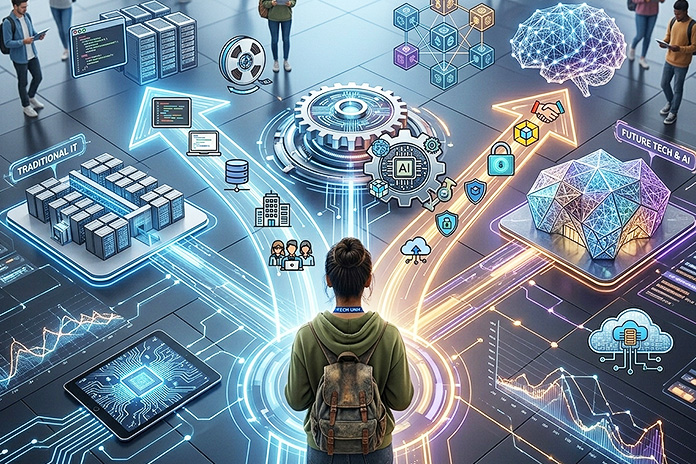
One of the biggest misconceptions about AI careers is that only software developers and machine-learning engineers need AI skills.
The employment landscape is broader than that.
AI is increasingly being used in areas such as:
- Marketing and sales
- Finance and accounting
- Human resources
- Customer support
- Operations
- Supply-chain management
- Content and digital media
- Data analysis
- Product development
- Cybersecurity
A 2026 workforce report from Scaler found that nearly half of AI-enabled career outcomes were outside traditional engineering roles, including areas such as leadership, consulting, HR, marketing, finance and academia.
This means a marketing professional who understands AI-powered analytics, for example, can build a different skill profile from someone who only knows traditional marketing tools.
Data Skills Are Becoming More Important
AI systems depend heavily on data.
That makes the ability to collect, organise, interpret and communicate data increasingly useful across different jobs.
Job seekers can benefit from developing skills such as:
Excel and spreadsheets: Still important for everyday business analysis and reporting.
SQL: Useful for working with structured databases and extracting information.
Data visualisation: Tools such as Power BI and Tableau can help professionals turn large datasets into understandable reports.
Basic statistics: Understanding averages, trends, probability and correlation helps people interpret data more effectively.
Data literacy: Knowing how to question data, identify errors and understand limitations is increasingly important as AI-generated analysis becomes more common.
The goal does not necessarily have to be becoming a data scientist. For many professionals, being comfortable working with data can be a significant career advantage.
Automation Is Changing Routine Work
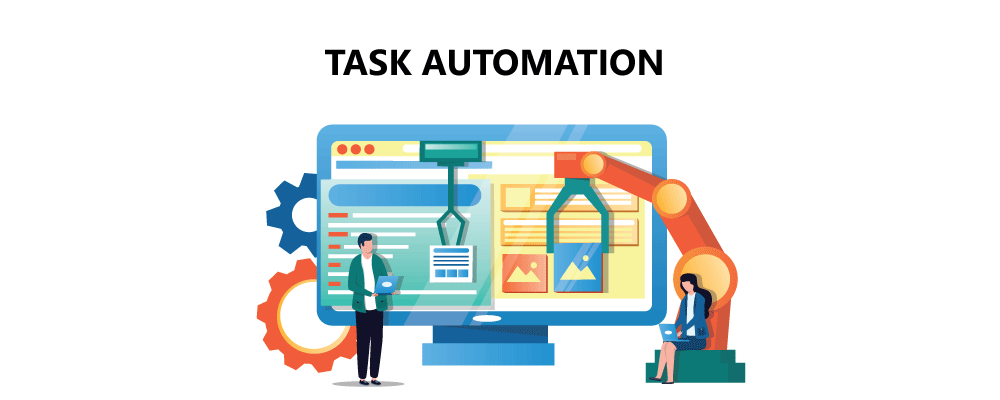
AI and automation are also affecting repetitive workplace tasks.
Routine activities such as basic data processing, document classification, simple reporting, repetitive customer queries and some coding or testing tasks can increasingly be supported by software.
The latest research presented by India's Chief Economic Adviser indicates that around 25% of India's workforce is now in occupations exposed to AI. Importantly, the same analysis stresses that AI exposure does not automatically mean job loss. AI can also complement workers and increase what they are able to accomplish.
This distinction matters.
The future workplace may not simply be about humans versus machines. In many cases, it will be about employees who know how to use technology effectively working alongside increasingly capable AI systems.
Companies Are Looking for AI-Ready Freshers
The change is particularly visible in India's IT-BPM sector.
Recent reporting suggests that fresher hiring is expected to recover, but the types of skills companies want are changing. Employers are increasingly looking for candidates with capabilities in AI, machine learning, data engineering, cybersecurity and other specialised technologies, rather than relying only on conventional entry-level coding or business-process roles.
This could make the traditional approach of simply completing a degree and applying for large numbers of entry-level jobs less effective.
For fresh graduates, building practical skills alongside academic qualifications can therefore become increasingly important.
Digital Skills Matter Even Outside Technology Jobs
AI adoption is also making general digital literacy more valuable.
A professional may not build an AI model but could still be expected to use AI-powered tools in everyday work.
For example:
A sales executive may use AI to analyse customer data.
A journalist may use AI-assisted research and transcription tools.
An HR professional may work with automated recruitment platforms.
An accountant may use software for data analysis and document processing.
A marketing professional may use AI for campaign analysis, content ideation and customer segmentation.
The common requirement is not necessarily advanced programming. It is the ability to understand technology, use it responsibly and judge whether its output is actually useful.
Human Skills Still Matter
The growth of AI does not make human skills irrelevant.
In fact, as routine tasks become increasingly automated, skills such as communication, critical thinking, creativity, problem-solving and decision-making can become even more important.
A person who simply accepts an AI-generated answer without checking it can create errors.
Someone who understands the business problem, uses AI to accelerate the work and then reviews the result critically can potentially create much more value.
This combination of technology skills + human judgment is likely to become an important part of the modern workplace.
What Skills Should Job Seekers Learn?
There is no single AI skill that guarantees employment.
A more practical approach is to build a combination of skills based on the career a person wants to pursue.
For Students and Freshers
Start with:
- AI fundamentals
- Generative AI tools
- Excel and data analysis
- Basic SQL
- Digital productivity tools
- Communication skills
- One specialised domain
Students interested in technology can then move towards Python, machine learning, cloud computing, data engineering or cybersecurity.
For Working Professionals
Professionals should first identify repetitive or data-heavy tasks in their current role.
They can then learn how AI and automation can improve those tasks.
For example, an HR professional could learn AI-assisted recruitment analytics, while a finance professional could strengthen data analysis and automation skills.
The objective should be career relevance, rather than collecting certificates without practical application.
Continuous Learning Is Becoming a Career Strategy

The pace of technological change means that learning cannot necessarily stop with a degree or first job.
India's government has highlighted AI skilling as an important part of preparing its young workforce, while industry reports continue to point towards shortages in specialised AI capabilities.
A 2026 NIIT India Skills Gap Report also identified AI, cybersecurity, digital and data skills among the country's critical future capabilities.
For job seekers, this does not mean constantly chasing every new AI tool.
Instead, it means developing the ability to learn new tools quickly.
A Practical AI Upskilling Roadmap

Someone starting from scratch can follow a simple progression:
Step 1: Understand basic AI and generative AI concepts.
Step 2: Learn how to use common AI tools effectively.
Step 3: Build basic data skills through Excel, SQL or visualisation tools.
Step 4: Learn automation relevant to your profession.
Step 5: Combine AI with your existing domain expertise.
Step 6: Build small practical projects that demonstrate what you can actually do.
Step 7: Keep updating your skills as tools and workplace requirements change.
This approach can be more useful than learning AI in isolation.
AI Skills Could Become a Competitive Advantage
India's AI transition is already influencing the labour market. Government data points to rising demand for AI skills, while companies are increasingly integrating AI into business functions. Deloitte's 2026 India findings, for example, reported significant or full AI usage among 40% of Indian respondents, compared with about 28% globally.
That does not mean every job will suddenly require advanced AI expertise.
But it does suggest that the ability to work with technology is becoming increasingly relevant across professions.
For job seekers, the bigger lesson is simple: learning how to use AI effectively may become as important as learning the specific tools used in a particular profession.