


AI Is Changing India's Job Market — But the 30,000 Figure Needs Context
For years, India's technology and services sector has been built around a simple formula: a large, skilled workforce serving global businesses from Indian cities.
Artificial intelligence is beginning to change that formula.
Recent industry reporting suggests that India's Global Capability Centre (GCC) ecosystem could see between 25,000 and 30,000 job cuts during the current fiscal year as multinational companies redesign operations around AI, automation and leaner teams. At the same time, the sector is expected to create around 150,000 new positions, particularly in technology and specialised functions. That makes the headline — “AI could put 30,000 jobs at risk” — attention-grabbing, but incomplete. The more important question is: What kind of jobs are disappearing, and what kind of jobs are replacing them?
What Are GCCs and Why Does This Matter for Indian Jobs?

Global Capability Centres, or GCCs, are offshore centres established by multinational companies to handle functions such as technology development, finance, analytics, research, cybersecurity, customer operations and product development. India has become one of the world's major GCC hubs. The sector is still expanding. A 2026 hiring tracker found that India had recorded nearly 228,000 GCC hires by June, with GCC hiring projected to reach more than 510,000 jobs during the year. At the same time, almost two-thirds of new GCC roles were reported to require AI, data science or intelligent-automation skills. So there are two things happening simultaneously: Some traditional work is being reduced. New, more specialised work is being created.
That is why the AI-jobs story cannot be reduced to a simple jobs-versus-machines equation..
Why Are Some Roles Coming Under Pressure?

The first areas facing pressure are generally those involving repetitive, predictable or highly standardised workflows. Think about work where employees repeatedly:-
- Process similar documents
- Perform routine data checks
- Generate standard reports
- Handle repetitive back-office tasks
- Follow predefined workflows
- Carry out basic testing or support activities
- Move information between systems
AI systems and automation tools can increasingly perform portions of these processes faster and at a lower marginal cost. ETtech has previously reported that a significant share of GCC work remains concentrated in commoditised, process-heavy functions that are increasingly being automated or redesigned around AI-enabled workflows. This does not necessarily mean that every person performing such work will lose their job. In many cases, the job itself may change. A person who previously spent most of the day completing a repetitive process could increasingly be expected to supervise AI systems, handle exceptions, check outputs or work on more complex problems..
The 30,000 Job-Cut Figure Doesn't Tell the Whole Story

The number has understandably attracted attention. But it is important to understand what the estimate actually represents. Industry executives cited in ET's reporting expect 25,000–30,000 job reductions in India's GCC sector this fiscal year as companies pursue AI-led productivity gains, reduce global headcount and restructure teams. Smaller GCCs focused heavily on routine work could face particular pressure. At the same time, the same reporting expects approximately 150,000 new positions to emerge. That means the story is not simply about 30,000 jobs disappearing. It is about the composition of employment changing. A company may reduce a large team performing repetitive work while simultaneously hiring fewer but more specialised employees in areas such as AI engineering, data, cloud, cybersecurity, product development and automation. The transition can still be difficult for workers whose existing skills no longer match the new requirements..
AI Is Also Creating New Jobs
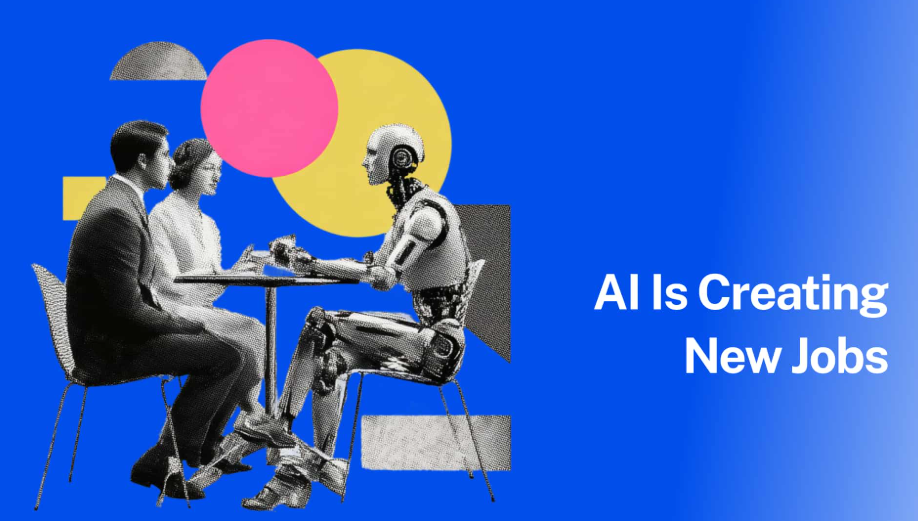
The other side of the story is already visible in India's hiring data. A Reuters report based on Naukri's June 2026 data found that AI-related hiring in India's IT sector increased 16% year on-year, even while overall IT recruitment declined by 3%. In GCCs, AI and data skills are becoming particularly important. These new positions can include roles involving:
- AI engineering
- Machine learning
- Data science
- Cloud computing
- AI infrastructure
- Cybersecurity
- Automation
- AI product development
- Model evaluation
- AI governance and compliance
The demand is not limited to people who build AI models. Companies also need professionals who understand how AI fits into finance, healthcare, manufacturing, retail, banking and other industries.
The Entry-Level Job Market Could Feel the Change

One of the biggest concerns is not necessarily the disappearance of all jobs, but the changing entry point into the technology industry. Traditionally, many graduates entered large companies through roles involving relatively structured and repetitive tasks. These positions gave employees an opportunity to learn the business before moving into more complex work. AI can automate some of that foundational work. That creates a difficult question for employers and educators: If machines perform more entry-level tasks, how will young professionals gain the experience needed to become senior professionals? Companies may increasingly look for graduates who arrive with practical AI, data and problem-solving skills rather than relying entirely on on-the-job training. Recent industry reporting also suggests that AI is changing the nature of entry-level work, with companies seeking a different mix of technical and business capabilities.
This Doesn't Mean Every IT Worker Needs to Become an AI Engineer
There is a common misconception surrounding the AI revolution: that everyone needs to learn advanced machine learning or become a programmer. That is not necessarily the case. The more realistic shift is toward AI-assisted work. A financial analyst may use AI to examine large datasets. A software developer may use AI coding tools. A marketing professional may use generative AI for research and content development. A lawyer may use AI to review documents. A customer-support professional may supervise AI-generated responses. The valuable skill may therefore be the ability to combine industry knowledge + technology + human judgement.
Human Skills Are Becoming More Important, Not Less
AI can process enormous amounts of information, but businesses still need people to make decisions, understand customers, manage teams and take responsibility for outcomes.
Skills such as:
- Communication
- Critical thinking
- Decision-making
- Creativity
- Leadership
- Negotiation
- Problem-solving
- Industry expertise
remain important.
A recent Korn Ferry survey reported that 81% of employees surveyed in India said AI had improved efficiency, while 79% reported higher productivity. At the same time, 78% said their workloads had increased and 73% said AI had expanded the number of tasks in their roles. That tells an important part of the story. AI is not simply replacing work. In many workplaces, it is changing the amount, speed and type of work people do..
What Should Indian Job Seekers Do?
The answer is not to panic.It is to understand where the market is moving. For students and early-career professionals, building practical familiarity with AI tools can be useful. Depending on the career path, that could mean learning data analysis, automation, AI-assisted software development, cloud technology or specialised industry applications. For experienced professionals, domain expertise can become even more valuable when combined with AI literacy..The goal is not necessarily to compete with AI. It is to become someone who knows how to use AI effectively within a real business environment..
India's GCC Sector Is Not Shrinking — It Is Evolving
The employment numbers show why the situation is more complicated than the phrase "AI job cuts." India's GCC ecosystem continues to attract investment and create technology-intensive positions. ET reported earlier this year that GCCs added nearly 200,000 net employees in FY26, substantially more than India's IT-services companies added during the same period.
Meanwhile, new GCC hiring is increasingly concentrated around specialised capabilities.
That suggests India's role in the global technology economy is changing rather than simply disappearing. Indian centres are increasingly being trusted with product development, engineering, AI and strategic business functions rather than only traditional back-office operations..
The Real Risk May Be a Skills Mismatch
Perhaps the biggest employment challenge created by AI is the gap between the skills workers currently have and the skills companies increasingly need. A company can simultaneously have thousands of employees and still struggle to find people who understand advanced AI systems.. For example, a professional may have years of experience in a traditional process but little exposure to automation or AI-enabled workflows. Another employee with fewer years of experience may have strong AI and data skills. As companies redesign their workforce, that difference can become increasingly important.. This is why reskilling and continuous learning are becoming central to the future of work.
So, Are 30,000 Indian Jobs Really at Risk?
The reported estimate applies specifically to India's GCC sector, not to all Indian jobs. And it is an industry estimate, not a government forecast that 30,000 jobs across India will disappear because of AI. That distinction matters. At the same time, there is clear evidence that AI and automation are already changing hiring patterns, especially in technology-intensive businesses. The more useful takeaway is therefore not that "AI is going to take 30,000 jobs." It is that companies are redesigning jobs around AI, and workers whose roles are highly repetitive may face greater pressure to adapt..
The Bigger Question: What Will the Job Look Like Five Years From Now?
The most interesting part of the AI revolution may not be the number of jobs that disappear.
It may be the number of jobs that become fundamentally different. A software engineer may supervise AI coding agents. An accountant may spend less time preparing spreadsheets and more time interpreting financial information. A customer-service employee may manage complex cases while AI handles routine requests. A designer may use generative tools to explore hundreds of concepts before refining the final product. In each case, the human role does not necessarily vanish, It changes.