


In India, festivals are rarely complete without something sweet on the table. A box of ladoos exchanged with neighbours during Diwali, a plate of gujiya prepared for Holi, a bowl of seviyan served on Eid or peda offered during Janmashtami — these foods are more than desserts. They are part of the way families celebrate, welcome guests and pass traditions from one generation to another. India's festival calendar is remarkably diverse, and so is its sweet tradition. Different regions have developed their own festive favourites, often using ingredients that are locally available and recipes that have been preserved for generations. Here are some of the most famous Indian sweets and the festivals with which they are closely associated..
1. Ladoos — Diwali

When people think about Indian sweets during Diwali, ladoos are among the first treats that come to mind. Besan ladoo, motichoor ladoo, boondi ladoo and coconut ladoo are commonly found in festive mithai boxes. Diwali is celebrated as the Festival of Lights and is associated with traditions of prayers, decorations, family gatherings, gift-giving and exchanging sweets. Official tourism material also lists gulab jamun and jalebi among the foods associated with Diwali celebrations. The ladoo's popularity comes partly from its versatility. Different regions and families have their own versions, using ingredients such as gram flour, semolina, coconut, sesame, nuts or lentils. For many households, making or buying a box of ladoos is as much a part of the Diwali ritual as decorating the home..
2. Gujiya — Holi

If Diwali has ladoos, Holi has gujiya. This crescent-shaped sweet is traditionally made with a flour covering filled with ingredients such as khoya, nuts and sugar before being fried or baked. In North India, gujiya has become closely associated with Holi celebrations. Holi itself is the festival of colours, and festive foods form an important part of the celebration. Incredible India specifically highlights gujiya alongside malpua, thandai and other traditional Holi treats. The preparation of gujiya can also become a family activity, with several generations coming together to prepare and shape the sweets before the festival..
3. Sheer Khurma and Seviyan — Eid
Eid-ul-Fitr is widely associated with sweet vermicelli preparations. Sheer Khurma is one of the best-known festive dishes, made with vermicelli, milk, dates, nuts and other ingredients. Depending on the region and family tradition, recipes can vary considerably. Seviyan or vermicelli-based desserts are also prepared in several styles, including richer versions with nuts and dried fruits. The festival marks the end of Ramadan and is a time for prayers, family gatherings, hospitality and sharing food. Incredible India describes Sheer Khurma and several varieties of seviyan as signature sweet preparations associated with Eid. For many families, the aroma of simmering milk and roasted vermicelli is inseparable from the morning of Eid..
4. Peda — Janmashtami
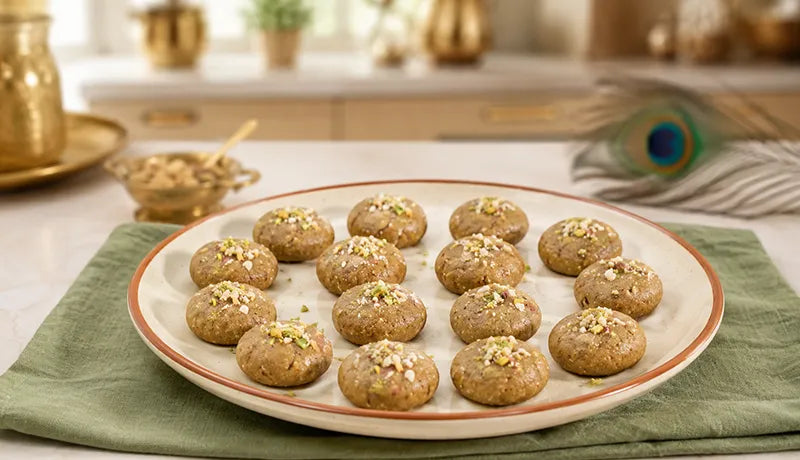
Peda has a particularly strong association with Krishna traditions, especially in Mathura and the Braj region. The milk-based sweet is often offered as prasad during Krishna-related celebrations.
Janmashtami celebrates the birth of Lord Krishna, and the festivities traditionally include devotional singing, temple celebrations, fasting and food offerings. In Braj, the connection between Krishna worship and local sweets is especially strong. Uttar Pradesh Tourism highlights Mathura peda and makhan mishri among the region's traditional foods during Krishnotsav celebrations. The sweet, therefore, represents more than just a dessert — it is part of the culinary identity of Mathura and the wider Krishna tradition..
5. Makhan Mishri — Janmashtami

Another food closely connected with Krishna is makhan mishri — traditionally a combination of fresh butter and crystallised sugar. The association comes from stories of Krishna's childhood love of butter. Janmashtami celebrations often include dairy-based offerings because of Krishna's traditional association with milk, butter and the pastoral life of Braj. Official tourism material also describes butter and milk-based foods as important elements of Krishna offerings, including the broader tradition of Chhappan Bhog..
6. Modak — Ganesh Chaturthi

Few festival sweets are as instantly recognisable as modak. The steamed version, commonly made with rice flour and a filling of coconut and jaggery, is particularly associated with Ganesh Chaturthi. Fried versions are also popular. The sweet is traditionally offered to Lord Ganesha, and families across Maharashtra and other parts of India prepare different varieties during the festival. Modak's appeal also lies in its regional diversity. While the basic idea remains similar, fillings, shapes and preparation methods can differ from one household or region to another..
7. Ghevar — Teej and Raksha Bandhan

The elaborate honeycomb-like ghevar is especially associated with Rajasthan and North Indian festive traditions. It is commonly prepared during the monsoon festival season, including Teej and Raksha Bandhan. Ghevar can be enjoyed plain or topped with rabri, nuts or saffron. In Rajasthan, its connection with Teej is particularly strong. Incredible India specifically mentions ghevar among the traditional sweets enjoyed during Teej celebrations. The sweet has therefore become part of the seasonal food culture surrounding the monsoon festivals..
8. Coconut Ladoo — Raksha Bandhan
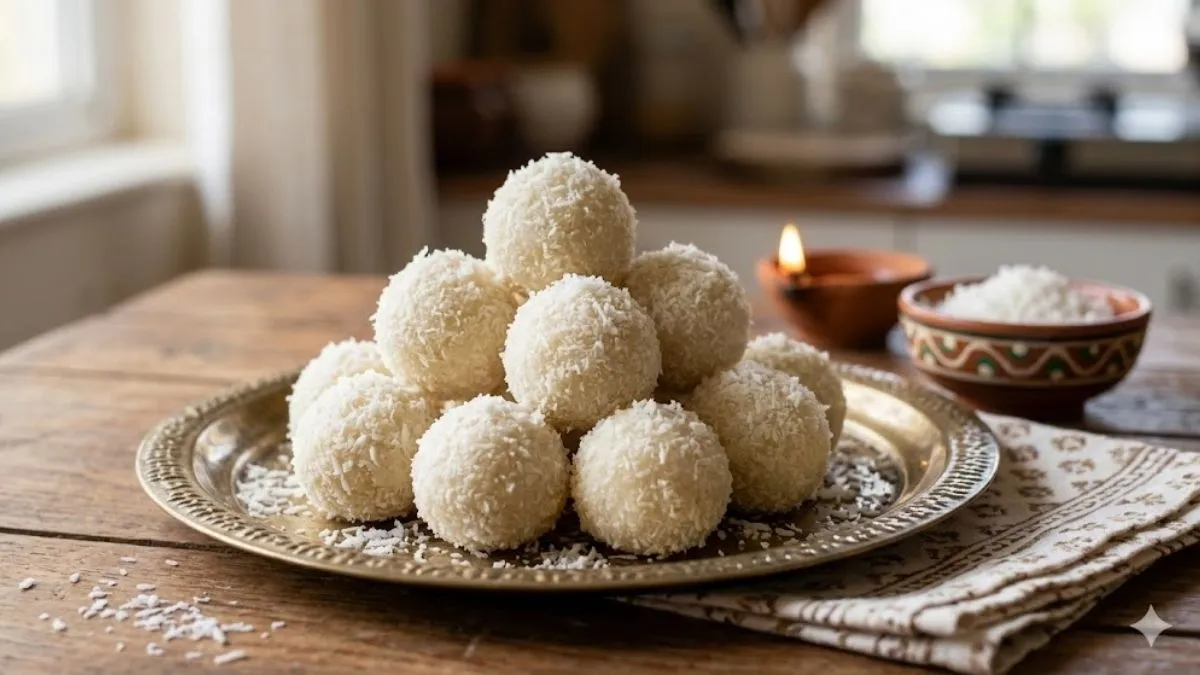
Raksha Bandhan is a celebration of the bond between siblings, and sweets are an important part of the traditional rituals. Coconut ladoo is one of the sweets commonly served during Rakhi celebrations, along with motichoor ladoo, kheer, payasam and halwa. During the festival, the traditional plate can include a rakhi, vermilion, rice, diya, incense and sweets. The exchange of sweets after the Rakhi ceremony adds a simple food ritual to a festival centred around family relationships..
9. Sakkarai Pongal — Pongal

In Tamil Nadu, Pongal is closely associated with rice, milk and jaggery. Sakkarai Pongal is a sweet preparation traditionally made with newly harvested rice, milk, jaggery, ghee and nuts. The dish reflects the agricultural character of the festival, which celebrates the harvest and expresses gratitude for nature, farmers and cattle. Unlike a packaged mithai, sakkarai pongal is often prepared fresh at home as part of the festival meal. Its simplicity is part of its appeal: rice, milk and jaggery become a festive dish with deep cultural meaning..
10. Payasam — Onam
Payasam is one of Kerala's best-known festive desserts and is strongly associated with the Onam feast, or Onam Sadya. Different varieties are prepared using ingredients such as rice, jaggery, coconut milk, milk, lentils or vermicelli. Onam is celebrated across Kerala and is known for its elaborate Sadya served on banana leaves. Payasam traditionally appears toward the end of the meal, giving the feast a distinctly sweet finish. The dessert also demonstrates how Indian festive food does not always fit into the conventional definition of a mithai. Sometimes, a simple bowl of sweet pudding can carry just as much cultural significance as a box of sweets..
11. Jalebi — Diwali and Other Celebrations
Jalebi is not exclusive to one festival, but it frequently appears on Indian festive tables. The crisp, spiral-shaped sweet is made from fermented batter, fried and then soaked in sugar syrup. Its bright appearance and syrupy texture make it popular during celebrations, religious occasions and family gatherings. In many parts of India, jalebi is also enjoyed with breakfast or alongside milk, rabri or other foods. Incredible India includes jalebi among the traditional sweets associated with Diwali celebrations..
12. Kheer — Multiple Festivals and Religious Occasions

Kheer is one of India's most versatile festive desserts. Usually made with rice, milk and sugar, it can be flavoured with cardamom, saffron, nuts and dried fruits. Different regions have their own versions, while related preparations may use vermicelli, millet or other grains. Kheer appears during religious ceremonies, festivals, family celebrations and special meals. It is also mentioned among traditional festive treats associated with Raksha Bandhan..
13. Malpua — Holi

Malpua is a soft, syrup-soaked pancake-like sweet that has a strong presence in North and eastern Indian food traditions. It is especially popular during festive occasions and is often served with rabri. Holi is one of the occasions with which malpua is commonly associated. Its rich texture makes it very different from lighter sweets such as peda or coconut ladoo, showing the enormous range of desserts that appear during Indian celebrations. Incredible India lists malpua among traditional Holi foods..
14. Til Ladoo — Makar Sankranti

Til ladoo, made primarily with sesame seeds and jaggery, is closely associated with Makar Sankranti and winter celebrations in several parts of India. Sesame and jaggery are particularly suited to the winter season, and the combination appears in several regional forms. In Maharashtra, the festival is also associated with the famous phrase encouraging people to exchange sesame-jaggery sweets and maintain goodwill. Different states have their own variations, including tilgul, sesame chikki and related preparations..
15. Churma Ladoo — Rajasthan Festivals

Rajasthan's rich sweet tradition includes churma ladoo, prepared from crushed wheat-based pieces combined with ghee, jaggery or sugar and nuts. The sweet is closely associated with Rajasthani festive and ceremonial meals. It is also connected with the broader tradition of dal baati churma, one of Rajasthan's best-known food combinations. The preparation illustrates how festival food often grows out of a region's everyday culinary traditions rather than existing separately from them..
Why Are Sweets So Important in Indian Festivals?
There is a simple reason sweets appear so frequently in Indian celebrations: they are easy to share. A box of sweets can be carried to a neighbour's house, offered after a prayer, exchanged between relatives or served to guests.
But the tradition goes deeper than hospitality. Sweets are often associated with auspicious beginnings, gratitude, celebration and the sharing of happiness. Recipes are also passed between generations. A grandmother's ladoo recipe or a family's particular style of gujiya can become part of its identity. This is why the same sweet can taste completely different from one household to another while still carrying the same emotional meaning..
India's Festival Sweets Are as Diverse as Its Festivals
One of the most fascinating things about Indian food culture is that there is rarely a single version of a traditional dish. A sweet can change with geography, ingredients, community and family history. Diwali may bring ladoos and jalebi, Holi brings gujiya and malpua, Eid brings seviyan and sheer khurma, Janmashtami brings peda and makhan mishri, while Pongal and Onam have their own distinctive sweet traditions. The food changes, but the idea remains remarkably consistent: festivals are meant to be shared..