


Crude Oil Prices Stay Above $100: How US-Iran Tensions Could Impact India

Crude oil has once again become one of the biggest talking points in global financial markets.
Brent crude, the international benchmark, has recently been trading around the $105 per barrel area, with prices moving sharply as investors closely watch developments involving the United States, Iran and the wider Middle East. On September 29, Brent briefly moved to around $107 a barrel before easing, while concerns about supply disruptions continued to influence the market.
For India, this is more than just an international oil-market story.
India imports a large share of the crude oil it consumes. That means every sustained increase in international oil prices can eventually affect the country's import bill, the rupee, inflation, transportation costs and the broader economy..
Why Is Crude Oil Above $100?
The recent rise in crude prices is closely connected to geopolitical uncertainty in the Middle East.
Markets are particularly focused on the Strait of Hormuz, a strategically important waterway through which a significant amount of global oil trade passes. Any prolonged disruption to shipping through the strait could make oil supplies tighter and push prices higher.
At the same time, uncertainty surrounding US-Iran negotiations and sanctions has made traders more cautious.
Recent market reports show that Brent prices have moved sharply as investors have reacted to developments surrounding the conflict, possible negotiations and the security of oil-supply routes.
This is why crude prices can move several dollars in a very short period..
Why Does the Strait of Hormuz Matter So Much?
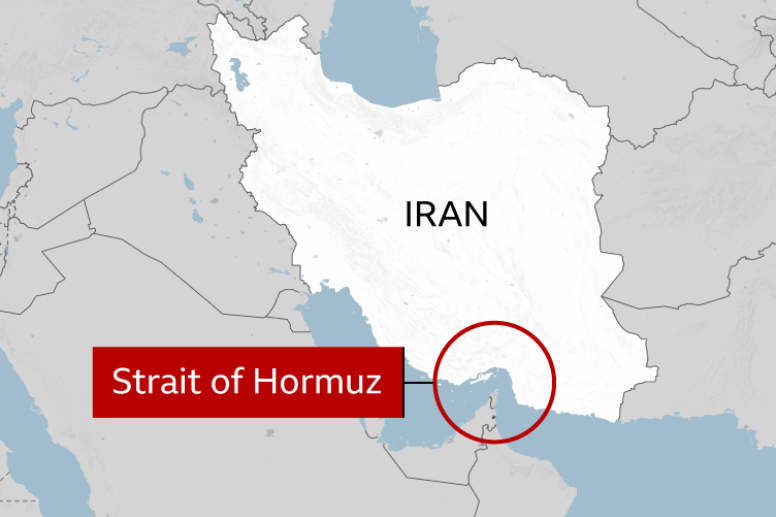
The Strait of Hormuz is one of the world's most important energy chokepoints.
Oil producers in the Persian Gulf rely heavily on this route to transport crude and petroleum products to international markets. Any disruption can therefore create concern far beyond the countries directly involved in the conflict.
For oil traders, the biggest question is not simply how much oil is being produced.
It is also:
Can that oil reach international buyers safely and efficiently?
Even the possibility of disruption can create a risk premium in crude prices.
Recent reports indicate that oil flows through the region have recovered from earlier disruptions, but remain below pre-conflict levels, keeping the market sensitive to further developments..
What Does Expensive Oil Mean for India?
India is particularly sensitive to crude oil prices because of its dependence on imported energy.
When international crude becomes more expensive, Indian refiners and importers have to spend more dollars to purchase oil.
That can create several economic pressures.
1. Higher Oil Import Bill
The first and most direct impact is India's oil import bill.
If crude prices remain elevated for an extended period, India may have to spend more foreign currency on energy imports.
That can put pressure on the country's trade balance and current account.
Interestingly, India's actual crude basket can be considerably more expensive than the headline Brent futures price because of freight, crude grades and regional supply conditions. A recent Financial Express report put India's crude basket above $120 per barrel while Brent futures were around $105.
This difference is important because the price Indian refiners actually face is not always identical to the international benchmark shown in headlines.
2. Pressure on the Indian Rupee
Oil prices and the rupee are closely connected.
India generally needs US dollars to pay for crude imports. When the oil import bill rises, demand for dollars can increase.
At the same time, investors may become more cautious toward emerging-market currencies during periods of geopolitical and inflationary uncertainty.
The rupee recently traded close to ₹96 per US dollar. Reuters reported that it settled around ₹95.9550 per dollar on September 24 amid pressure from rising oil prices and broader global market factors. By September 30, it was around ₹95.97.
A weaker rupee can make imported commodities, including crude oil, more expensive in rupee terms.
This creates a difficult cycle:
Higher crude prices → higher dollar demand → pressure on rupee → more expensive imports.
3. Inflation Risk
Crude oil doesn't affect only petrol and diesel.
Oil is connected to a much wider part of the economy.
Transportation, logistics, aviation, manufacturing and several industrial activities depend directly or indirectly on petroleum products.
If fuel and transportation costs remain elevated, businesses may face higher operating expenses. Some of these costs can eventually be passed on to consumers.
That is why a prolonged oil-price surge can become an inflation concern for countries such as India.
4. What About Petrol and Diesel Prices?
This is one of the questions Indian consumers naturally ask whenever crude oil rises.
However, international crude prices do not automatically translate into an immediate and equal change in retail petrol and diesel prices.
Domestic fuel prices depend on several factors, including international product prices, taxes, refining costs, marketing margins and government or oil-company pricing decisions.
Therefore, consumers should not assume that every $5 increase in Brent will immediately produce a specific increase at the fuel station.
5. The Stock Market Can Also Feel the Impact
Higher crude prices can affect different sectors in different ways.
Companies that consume large amounts of fuel or depend heavily on transportation may face higher costs.
Airlines, logistics companies and some manufacturing businesses can therefore become sensitive to prolonged increases in energy prices.
On the other hand, oil producers and some energy-related businesses may benefit from higher crude prices, depending on their business structure.
This means investors should avoid looking at rising crude prices as automatically positive or negative for the entire stock market.
The impact varies from sector to sector.
6. The Rupee and Oil: A Combination Investors Should Watch
For Indian investors, the combination of high crude oil + a weak rupee is particularly important.
Suppose crude becomes more expensive in dollar terms while the rupee also loses value against the dollar.
The effective cost of importing oil in rupees can rise even more.
This is one reason currency movements deserve as much attention as the headline crude price.
The Reserve Bank of India has also been active in the foreign-exchange market during recent periods of rupee pressure, with state-run banks selling dollars to help limit sharp moves.
7. Could Oil Prices Fall Again?
Yes, and this is where the situation becomes particularly uncertain.
Oil prices are being driven not only by current supply and demand but also by expectations about what happens next.
If US-Iran tensions ease, sanctions-related uncertainty declines and normal shipping through the Strait of Hormuz improves, the supply-risk premium in oil prices could reduce.
On the other hand, a significant deterioration in the situation or a prolonged disruption to oil transportation could keep prices elevated.
Recent diplomatic efforts involving mediators have focused on finding a path toward negotiations and restoring normal passage through the Strait of Hormuz, but the outcome remains uncertain.
8. What Should Indian Consumers and Investors Watch?
Rather than focusing on one day's crude price, it may be more useful to watch several indicators together:
- Brent crude prices
- The Indian Crude Basket
- USD/INR exchange rate
- Strait of Hormuz shipping conditions
- US-Iran diplomatic developments
- India's inflation data
- India's trade deficit and current account
- Petrol and diesel prices
- Global interest-rate expectations
Looking at these factors together gives a better picture of how the oil shock could affect the Indian economy.
The Bigger Picture
The current oil-market situation is a reminder of how closely global geopolitics and everyday economics are connected.
A conflict thousands of kilometres away can eventually influence the price of fuel, transportation costs, inflation and even the value of the Indian rupee.
For India, the key issue is not simply whether Brent crude crosses $100.
The bigger question is how long crude remains expensive and whether the disruption to global oil flows becomes temporary or prolonged.
If tensions ease and supply routes normalize, oil prices could see relief. If supply risks remain elevated, India could continue to face pressure through its import bill, currency and inflation.
For consumers and investors, therefore, the next few weeks will be important—not because one particular oil-price number tells the entire story, but because the direction of global supply and geopolitical tensions could determine where prices go next.
Final Takeaway
High crude oil prices are not just an energy-market issue for India. They can influence the rupee, inflation, imports, transportation costs and several parts of the economy.
With Brent crude hovering around the $100+ level and the Strait of Hormuz remaining a major focus for global markets, oil is likely to remain an important indicator for India's economy in the near term.