


Artificial intelligence is no longer just about chatbots, smart assistants or automated software. Behind every AI model is a massive physical infrastructure network made up of data centres, powerful computer chips, electricity systems, cooling equipment and high-speed connectivity.
India is now entering a major expansion phase in this infrastructure race. As businesses adopt AI, cloud computing and digital services, demand for computing capacity is increasing. Global technology companies and Indian businesses are investing in facilities designed to support the next generation of AI applications.
However, this growth comes with an important question: can India build enough data centres, secure reliable electricity and attract sustainable investment without creating new financial and environmental challenges?
The country's AI infrastructure opportunity is substantial, but its long-term success will depend on how effectively these challenges are managed.
India's AI Infrastructure Boom: Key Highlights
- India's installed data centre capacity reached approximately 1,575 MW in August 2026, according to the Ministry of Electronics and Information Technology.
- India's Ministry of Power has projected that AI data centres could add 26.3 GW of electricity demand by 2031–32.
- Wood Mackenzie forecasts that India's operational data centre capacity could increase from 2.2 GW in 2025 to 12 GW by 2030.
- Rising demand is creating opportunities in data centres, power generation, transmission infrastructure, cooling technology and renewable energy.
- Electricity availability, water consumption, construction costs and uncertain investment returns remain important risks.
These figures come from different sources and use different capacity measures and forecasting methods. They should not be treated as directly comparable estimates. Sources: MeitY, Indian Express and Wood Mackenzie.
What Is Driving India's AI Infrastructure Growth?
India's AI infrastructure expansion is being driven by several developments happening at the same time.
1. Growing Demand for Artificial Intelligence
Businesses are increasingly using AI for customer service, software development, data analysis, financial services, healthcare and industrial automation.
These applications require computing systems capable of processing large amounts of information quickly. Generative AI adds another layer of demand because training and operating advanced models can require specialised processors, high-speed networking and substantial computing capacity.
As more companies integrate AI into their daily operations, demand for reliable computing infrastructure is likely to increase.
2. Expansion of Cloud Computing
Cloud services allow businesses to store information, run applications and access computing resources without maintaining all the required hardware themselves.
India's expanding digital economy, online businesses, financial services and enterprise software market are supporting demand for cloud infrastructure.
AI is accelerating this trend. Companies that already use cloud services may need additional capacity to run AI workloads, while technology providers are building facilities to serve both domestic and international customers.
3. India's Growing Digital Economy
Digital payments, online shopping, video streaming, government services and connected devices all depend on data processing and storage.
India's large internet user base creates a strong foundation for digital infrastructure investment. As more services become digital and AI-enabled, the need for secure, reliable and scalable data centres is becoming increasingly important.
4. Investment by Global Technology Companies
International cloud providers and domestic infrastructure companies are expanding their presence in India to serve growing demand.
Google, Microsoft, Amazon and Indian business groups are among the major players associated with India's expanding digital infrastructure ecosystem. Announced investment programmes cover a range of assets, including cloud regions, data centre campuses, computing capacity and related infrastructure.
However, an announced investment commitment is not the same as completed expenditure or operational capacity. Actual project progress, financing, construction and customer demand will determine how quickly these plans translate into working facilities.
India's Data Centre Capacity: How Fast Is It Growing?
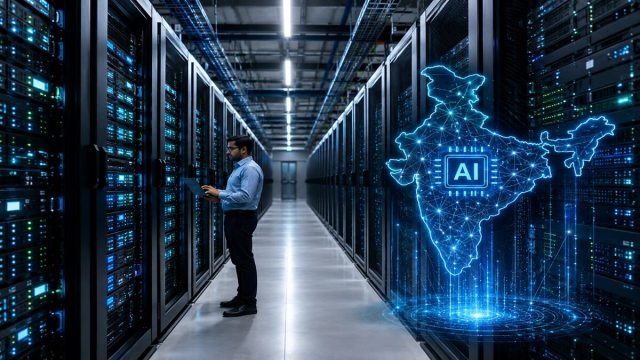
India's data centre market has expanded considerably over the past few years.
According to the Ministry of Electronics and Information Technology, installed data centre capacity increased from approximately 375 MW in 2020 to around 1,575 MW in August 2026.
Industry forecasts suggest that much larger capacity additions could follow as AI and cloud computing demand increases.
Research firm Wood Mackenzie projects that India's operational data centre capacity could grow from 2.2 GW in 2025 to 12 GW by 2030. Its forecast also suggests that AI-dedicated capacity could rise from 275 MW to 6,546 MW over the same period.
These projections indicate the scale of the opportunity, but they remain forecasts rather than guaranteed outcomes. Differences in definitions, operational status and project pipelines explain why estimates from different organisations may vary.
For investors and businesses, the key question is not simply how much capacity has been announced. It is how much can be financed, connected to reliable power, completed on schedule and supported by paying customers.
Why Electricity Is Becoming the Biggest Challenge
Data centres need electricity around the clock. Their servers, storage systems, networking equipment and cooling infrastructure must operate continuously to keep digital services available.
AI facilities can have especially high power requirements because advanced processors generate substantial heat and need significant amounts of energy.
The scale of the challenge is reflected in India's power demand outlook. According to reporting by The Indian Express on July 27, 2026, the Ministry of Power projected that AI data centres could add 26.3 GW of electricity demand by 2031–32.
That projection highlights the need for more than just new data centre buildings. India will also need sufficient generation capacity, transmission lines, substations, transformers and dependable connections to the electricity grid.
Can India's Power Grid Keep Up?
Expanding electricity generation is only part of the solution. Power must also be delivered to the right locations at the right time.
A data centre may have financing, land and equipment ready, but a shortage of transmission capacity or delays in obtaining a grid connection can postpone operations.
Large, concentrated computing loads also need careful planning to protect grid reliability. Data centre operators must coordinate with utilities to understand available capacity, backup arrangements and the timing of infrastructure upgrades.
If power infrastructure does not develop at the same pace as computing capacity, some projects could face delays, higher costs or restrictions on expansion.
Renewable Energy and the Future of AI Data Centres

Renewable energy is likely to play an important role in supporting India's data centre expansion.
Solar and wind power can help operators reduce emissions and manage exposure to conventional electricity prices. Long-term renewable energy agreements may also improve cost visibility for facilities with large, predictable power requirements.
However, solar and wind generation vary with weather and time of day, while data centres generally require electricity continuously.
This creates a need for a broader energy strategy that may combine renewable generation, storage, grid electricity and other reliable power arrangements.
Battery storage, better energy management and improvements in cooling efficiency could help operators manage demand more effectively. The commercial viability of these solutions will depend on local conditions, technology costs and applicable regulations.
For investors, access to reliable and competitively priced electricity may become one of the most important factors separating successful data centre projects from less competitive ones.
Water Consumption and Environmental Concerns
Electricity is not the only resource challenge associated with data centres. Cooling systems can also require water, depending on their design and operating conditions.
As computing equipment becomes more powerful, removing heat efficiently becomes increasingly important. Some cooling technologies use water to improve efficiency, while others rely on different combinations of air cooling, liquid cooling and closed-loop systems.
The environmental impact depends on the specific technology, local climate, water availability and the source of electricity.
A facility located in a water-stressed area may face greater operational and community risks than a comparable project with access to more suitable resources.
This issue is becoming more visible as major data centre investments expand beyond established technology hubs. Local communities may raise concerns about water access, land use, noise, electricity availability and the distribution of economic benefits.
For the sector to grow sustainably, developers need to consider local resource conditions before selecting sites. Water-efficient cooling, responsible groundwater management and transparent environmental assessments can help reduce the risk of conflicts.
Where Are India's Data Centre Investment Opportunities?
The AI infrastructure boom extends well beyond companies that directly operate data centres. A complete facility requires a wide range of equipment, services and supporting infrastructure.
1. Data Centre Operators
Companies that build, lease and operate data centre facilities may benefit from rising demand for secure computing capacity.
Their business performance will depend on occupancy rates, customer contracts, electricity costs, financing expenses and the speed at which new facilities become operational.
2. Power Generation and Renewable Energy
Data centres require substantial electricity, creating potential demand for renewable power developers, electricity suppliers and energy storage solutions.
However, the benefits will depend on project economics, power purchase agreements, grid connectivity and the ability to provide reliable electricity at competitive prices.
3. Transmission and Electrical Equipment
New facilities require substations, transformers, switchgear, cables, backup power systems and other electrical equipment.
Companies supplying these products and services may benefit from infrastructure expansion, although delivery delays, manufacturing capacity and pricing pressures can affect project timelines and profitability.
4. Cooling and Energy Efficiency
High-performance computing generates considerable heat, making cooling systems a critical part of data centre design.
Air cooling, direct-to-chip liquid cooling and other advanced solutions may create opportunities for specialist technology providers. Demand will depend on the requirements of each facility and the pace of adoption of higher-density computing systems.
5. Construction and Engineering
Data centre campuses require specialised buildings, reliable power connections, fibre networks, security systems and carefully managed construction projects.
Engineering, procurement and construction companies may benefit from new projects, but fixed-price contracts, rising material costs and delays can reduce margins.
The important distinction is that industry growth does not guarantee that every company operating in the supply chain will generate attractive returns.
Investment Risks: What Could Go Wrong?

Despite strong growth expectations, India's AI infrastructure sector carries several risks that investors should understand.
1. High Capital Expenditure
Building a data centre requires substantial upfront spending on land, construction, electrical systems, cooling equipment, servers and networking infrastructure.
AI-ready facilities can require particularly expensive hardware and specialised designs.
If a project costs more than expected or takes longer to generate revenue, its financial returns may fall short of projections.
2. Power Availability and Grid Delays
A completed building cannot operate at its intended capacity without a suitable electricity connection.
Delays in transmission infrastructure, transformers, substations or approvals can postpone revenue generation while financing and construction costs continue to accumulate.
Investors should assess power availability and connection timelines rather than relying only on announced capacity.
3. Demand May Not Match Expectations
The rapid adoption of AI creates opportunities, but forecasts can be wrong.
If enterprise AI adoption grows more slowly than expected, or customers use computing resources more efficiently, some facilities may experience lower-than-anticipated demand.
Projects based on optimistic assumptions about future occupancy or pricing could struggle to achieve their expected returns.
4. Financing and Interest Rate Risk
Data centre projects often require significant capital before revenue begins.
Higher borrowing costs can make projects more expensive, while refinancing difficulties may create pressure on businesses with substantial debt.
Investors should examine leverage, interest expenses, debt maturity schedules, cash flow and the quality of customer contracts.
5. Technology Changes
AI hardware and data centre architecture continue to evolve.
Changes in processor efficiency, server design, cooling technology and computing methods may affect the economics of existing facilities. Buildings and electrical systems can have long useful lives, but specialised IT equipment may need replacement or upgrades much sooner.
Operators must balance current demand with the risk of investing in infrastructure that becomes less competitive over time.
6. Environmental and Regulatory Risks
Water restrictions, environmental approvals, land-use rules and electricity regulations can influence where facilities are built and how they operate.
Projects that fail to address local concerns may encounter delays, higher compliance costs or reputational damage.
7. Valuation Risk
Strong industry growth does not automatically make an investment attractive at every price.
Investors may pay too much for companies based on aggressive forecasts that assume high utilisation, favourable electricity prices and rapid expansion.
If growth disappoints or costs rise, market valuations may adjust even when the overall data centre industry continues to expand.
What Should Investors Monitor?
Anyone evaluating India's AI infrastructure opportunity should look beyond headline investment announcements.
Important indicators include:
- Operational capacity: How much capacity is actually running rather than merely planned?
- Customer commitments: Are facilities supported by long-term contracts with credible customers?
- Power access: Is reliable electricity available, and are grid connection timelines realistic?
- Project financing: Can developers fund construction without taking on excessive debt?
- Utilisation and pricing: Are facilities attracting customers at sustainable rates?
- Construction progress: Are projects being completed on time and within budget?
- Energy efficiency: How effectively are electricity and cooling resources being used?
- Valuation: Does the current price reasonably reflect the company's expected earnings and risks?
These factors can help distinguish companies with sound business models from projects that rely heavily on optimistic assumptions.
This is a framework for evaluating the sector, not a recommendation to buy or sell any particular security.
India's AI Infrastructure Boom: What Lies Ahead?
India's AI infrastructure expansion is likely to remain an important part of its broader digital development. Growing cloud adoption, AI applications and enterprise demand provide a strong reason to expand domestic computing capacity.
At the same time, the sector's development will depend on practical constraints. Capital must be available, power infrastructure must keep pace, facilities must be completed efficiently and customers must be willing to pay for the capacity being built.
Government policy, state-level incentives, access to renewable energy and improvements in cooling technology will also influence how the market develops.
The strongest projects are likely to be those that combine reliable power, efficient resource use, sound financing and genuine customer demand rather than relying only on the promise of future AI growth.